The short version
- Open repair uses one small incision right at the navel; it is a well-established, direct approach for many umbilical hernias.
- Many smaller hernias are closed with strong sutures alone; is added for larger (over 2 cm) or recurrent hernias, or a higher BMI.
- When mesh is used, it is placed with generous overlap for durability, and rebuilding a natural, inward-appearing navel is part of the plan.
- Most patients go home the same day; nothing over 10 to 15 pounds until your 2 week visit, when we reassess.
A quick summary. The full details are below, and none of it replaces an exam.
What is an umbilical hernia?
An hernia happens when tissue from inside your abdomen pushes through a weak spot in the abdominal wall at or near your navel. That tissue might be fat, the lining around your intestines (omentum), or in some cases a loop of intestine itself, creating a visible or feelable bulge.
Types of umbilical hernia
- Reducible: the bulge goes back in when gently pushed.
- : the bulge stays out, even with pressure.
- : the blood supply to the trapped tissue is cut off. This is a surgical emergency, and if this is suspected, you'll be sent straight to the Emergency Department.
- Recurrent: a hernia that has been repaired before and has come back.
When is mesh used?
The decision about whether mesh is needed depends mainly on the size of the actual defect in the (not how big the bulge looks from outside), your BMI, whether this is a repeat hernia, and any other medical or physical conditions.
- Hole under 1 cm: if there is only a minimal diastasis, stitches alone may be enough. I may still recommend a robotic repair with mesh if you have a BMI over 30, smoke, have diabetes (an A1C usually over 7%), do heavy lifting, or have a physical job.
- Hole 1 to 4 cm: we decide together. I recommend the robotic repair. I close the hole, then lay the mesh over it, just outside the inner lining of the abdomen, with 2 cm of overlap.
- Hole over 4 cm: I treat it like an incisional hernia. I close the hole, and the mesh goes behind the muscle, with at least 5 cm of overlap.
- A hernia that has come back: mesh is generally recommended.
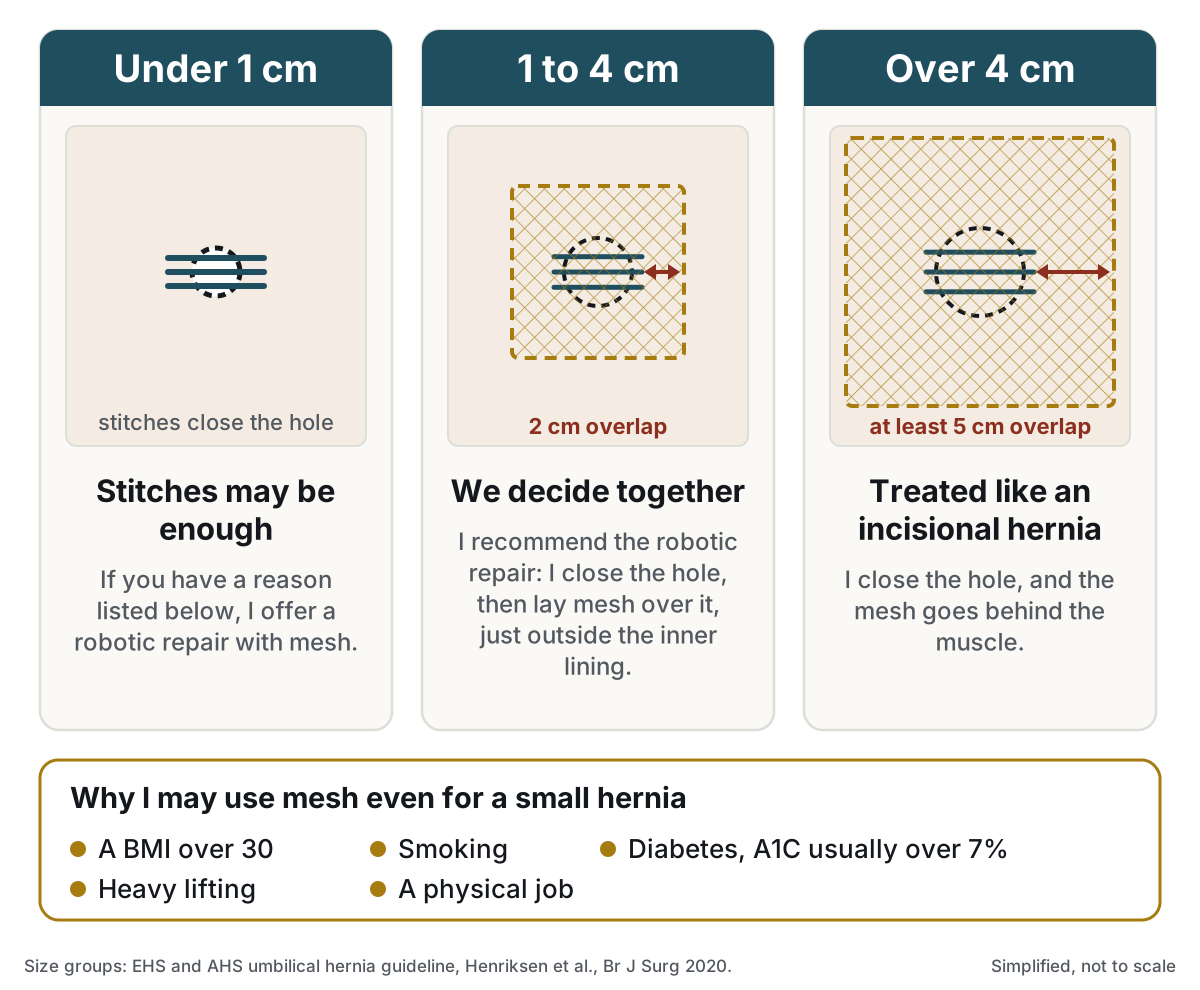
The size groups come from the European Hernia Society and Americas Hernia Society guideline. It recommends mesh for most umbilical hernias, because mesh lowers the chance of the hernia coming back, and it allows stitches alone for holes under 1 cm after we talk it through. For holes of 1 to 4 cm, it suggests an open repair with mesh just outside the inner lining for most patients. I usually recommend the robotic repair because I find the mesh easier to place. For holes over 4 cm, it suggests treating the hernia like an incisional hernia.
Reference: Henriksen NA, Montgomery A, Kaufmann R, et al. Guidelines for treatment of umbilical and epigastric hernias from the European Hernia Society and Americas Hernia Society. Br J Surg. 2020;107(3):171-190. doi:10.1002/bjs.11489
How open repair works
Open umbilical hernia repair is done through a single small incision right at the navel. It is a well-established, reliable operation, and for many smaller hernias it is the most direct approach.
- Anesthesia: you're fully asleep for the procedure.
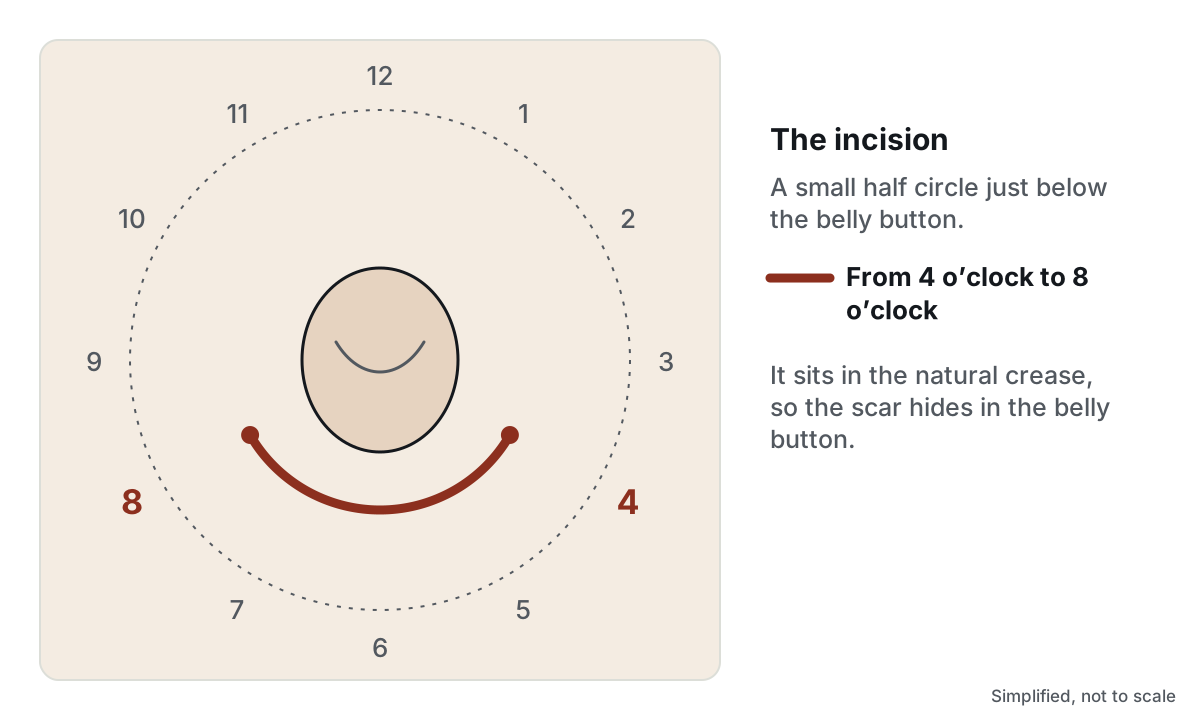
- The incision: a small, curved incision is made at or just beneath the navel, following its natural crease so the scar stays hidden.
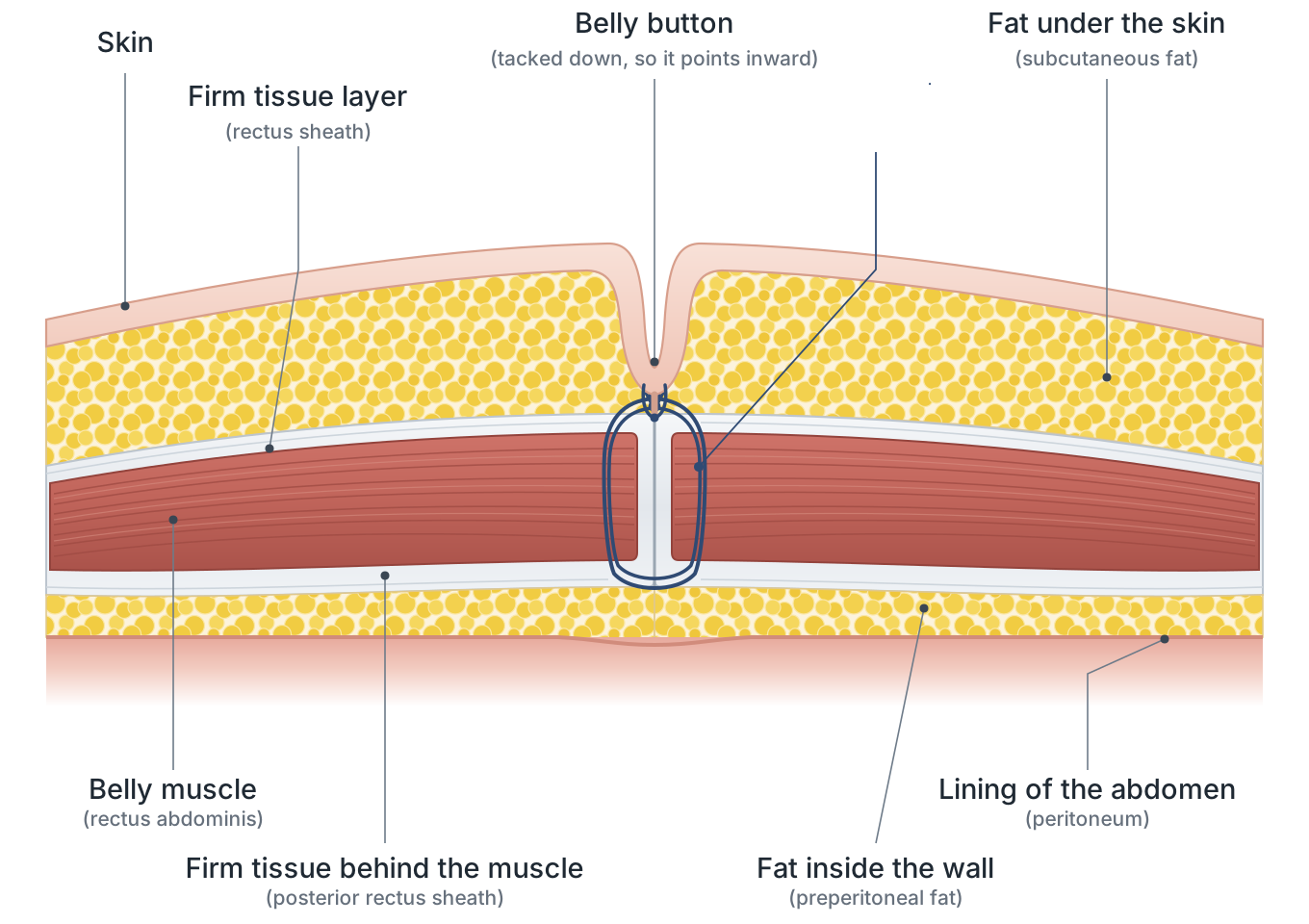
- Freeing the hernia: the bellybutton is gently lifted and the hernia sac is separated from the surrounding tissue. The contents (usually fat or the lining around the intestines) are eased back into the abdomen.
- Closing the defect: the gap in the muscle is closed with strong sutures.
- Placing mesh (if indicated): for defects larger than about 2 cm, recurrent hernias, or a higher BMI, a flat mesh is added, usually positioned in the space just behind the muscle layers with generous overlap around the defect. That overlap is what lowers the chance the hernia comes back. Very small hernias are often closed with sutures alone.
- Reconstructing the navel: the navel is tacked back down as the repair is closed, with careful attention to restoring a natural, inward-appearing bellybutton.
- Closing up: the skin is closed underneath with dissolvable stitches and sealed with a waterproof skin glue, so there are no staples or visible stitches to remove. A compression dressing is usually placed over the navel.
Technique details on mesh placement and overlap reflect the EHS/AHS umbilical & epigastric hernia guidelines, adapted to Dr. Rodriguez's practice.
Getting your body ready for surgery
- Quit smoking well before surgery and stay smoke-free during recovery. Smoking significantly raises the risk of wound problems, infection, and recurrence.
- Control blood sugar. For patients with diabetes, an A1C under 7% before elective surgery improves healing and lowers infection risk.
- Weight management and control of other chronic conditions may also be part of your prep.
Risks to know about
- Bleeding (usually minor)
- Infection of the incision or, rarely, the mesh
- Injury to structures beneath the hernia during the repair. This risk is small, but does vary based on anatomy and scar tissue
- Hernia recurrence, even with proper technique
- Chronic pain, fluid collection (seroma), or scarring
Recovery: what to expect
- Wound care: incisions are closed under the skin with dissolvable stitches and a watertight purple surgical glue. You can shower the day of surgery; just pat dry. Do not submerge incisions in a pool, tub, or other body of water for at least 4 weeks. A compression dressing over the navel is usually removed the Sunday after surgery.
- Sun protection: avoid sun exposure on incisions for 6 months to prevent permanent discoloration.
- Pain control: scheduled Tylenol (acetaminophen), Celebrex (celecoxib), and Robaxin (methocarbamol) for the first 3 days, with a narcotic available for breakthrough pain only.
- Activity: walking is encouraged right away. Avoid lifting, pushing, or pulling more than 10 to 15 pounds until your 2 week visit, when we reassess. A gallon of milk weighs a little over 8 pounds, which gives you a sense of the limit. Avoid core exercises for 4 weeks. You can drive again when no longer taking narcotic / sedating medications and you can quickly go from gas to brake pedal without pain inhibiting your movement.
For more information, see Recovery and getting back to life.
- Fever over 101°F
- Increasing redness, warmth, swelling, or drainage at the incision
- Pain that's getting worse despite medication
- Persistent nausea or vomiting
- A new or growing bulge
- Constipation
If it's after hours, your call will be routed to our answering service. The on-call surgeon or PA will receive your message and contact you.
For uncontrolled pain, shortness of breath, chest pain, or inability to keep fluids down, seek urgent medical attention right away rather than waiting for office hours.