What is robotic eTEP hernia repair?
eTEP rebuilds the abdominal wall through small ports from the space behind the rectus muscles, without entering the abdominal cavity. I close every hole, rebuild the middle, and lay a wide mesh flat behind the muscles, away from your intestines. Most patients go home after one night. Nothing over 10 pounds for 4 weeks.
New to incisional hernias? Start with the overview: what a hernia is, when to repair it, getting ready, risks, and recovery.
 Video coming soon
What does eTEP mean, and why use the robot?
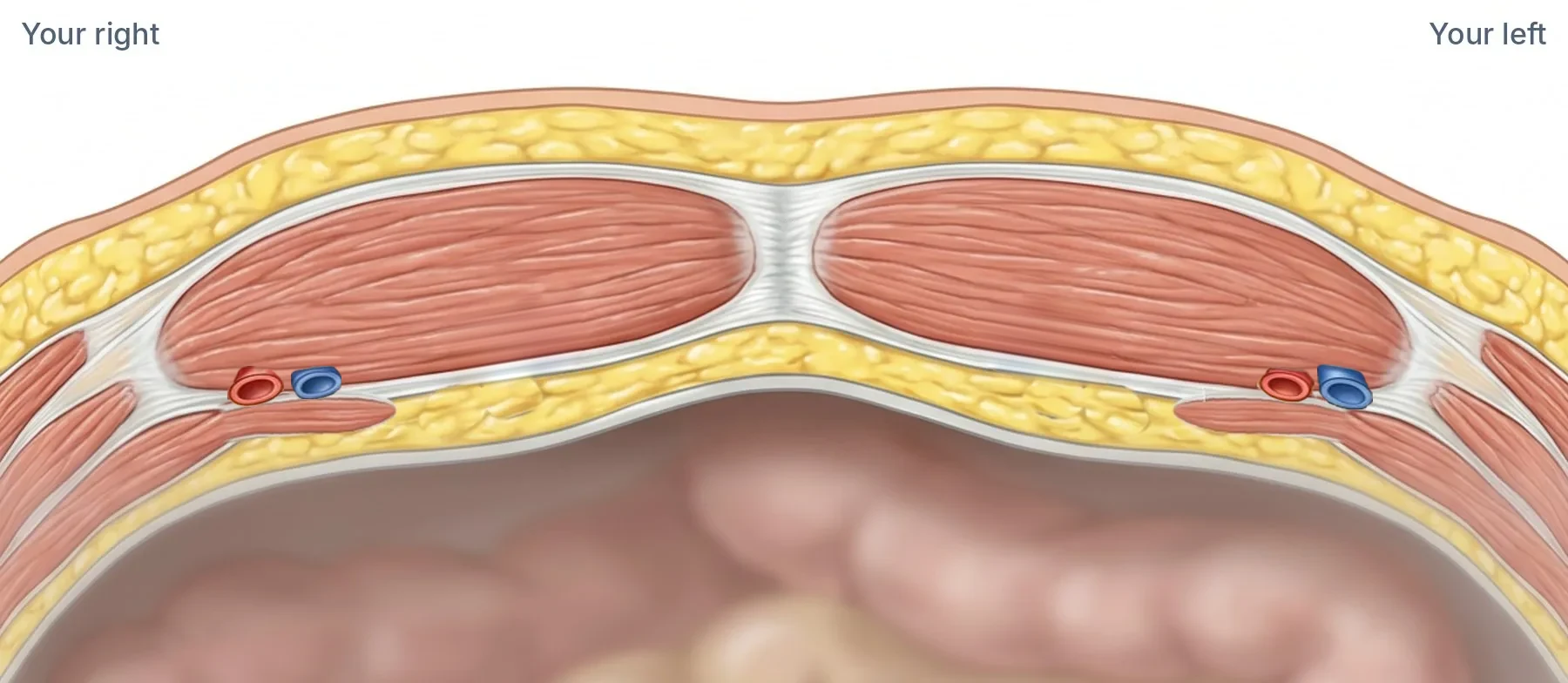
eTEP stands for "enhanced view totally extraperitoneal" repair. It is a minimally invasive way to rebuild the abdominal wall from the space behind the rectus muscles, without entering the main abdominal cavity. Keeping the mesh in this space means it does not touch your intestines.
The robot gives me a 3D view with depth, wristed instruments that work in tight spaces, and the ability to follow the same principles as an open reconstruction. Every movement is controlled by me; the robot does nothing on its own.
Goals of robotic eTEP surgery
- Find and repair every hernia defect, not just the obvious one
- Rebuild the center line of your abdomen (linea alba)
- Reinforce the repair with a wide mesh behind the muscles
How do I do a robotic eTEP repair, step by step?
Ultrasound maps your left rectus
. I start on your left side. Before the first incision, I find the borders of the left rectus with ultrasound and mark them on your skin.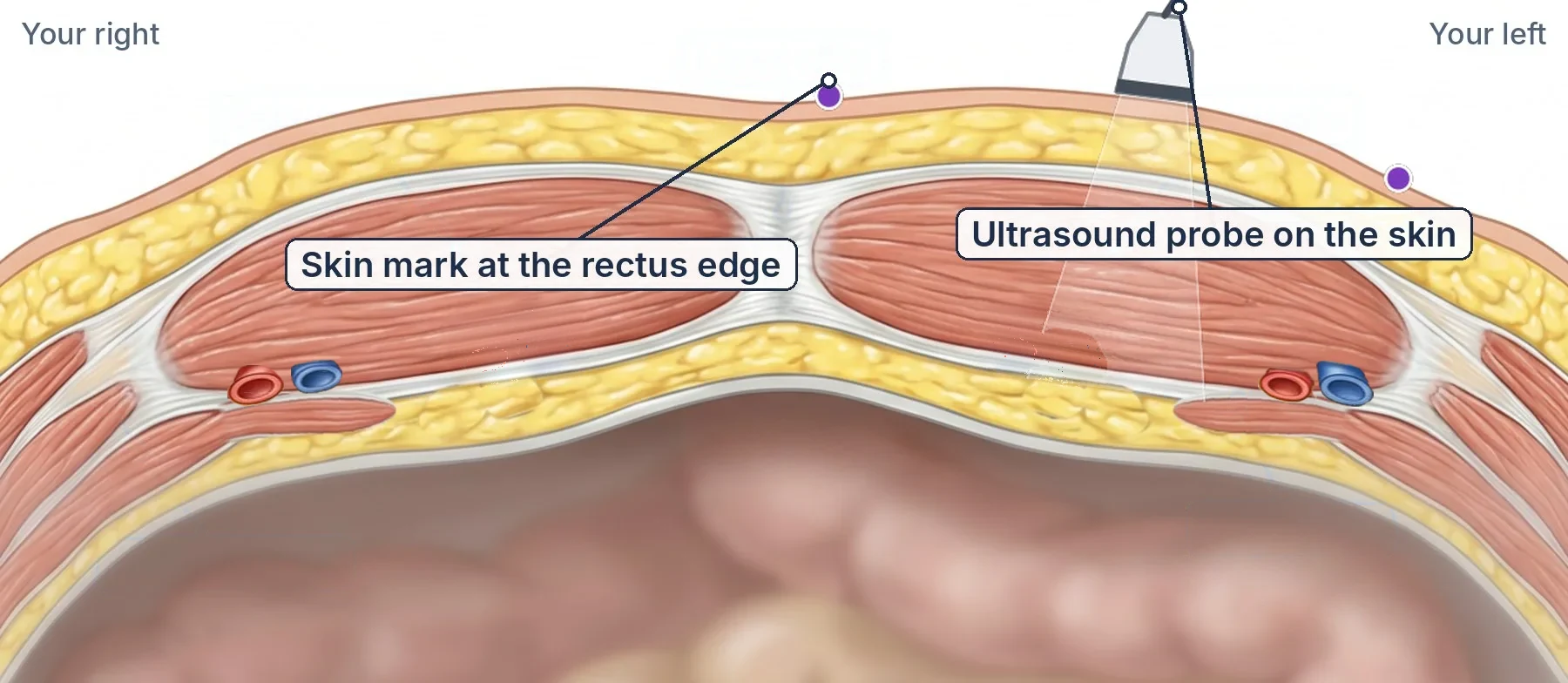
Ultrasound finds the edges of the rectus, and I mark them on your skin. Enter high, then three ports
. I enter just off the midline, high near the breastbone, with a clear trocar so I see each layer as I pass through it. Gas gently opens the space behind the left rectus. The camera port goes along the outer edge of the left rectus at the level of your belly button, with working arms 8 cm above and 8 cm below it. Sometimes the angle the instruments need puts a port a little outside the marker line.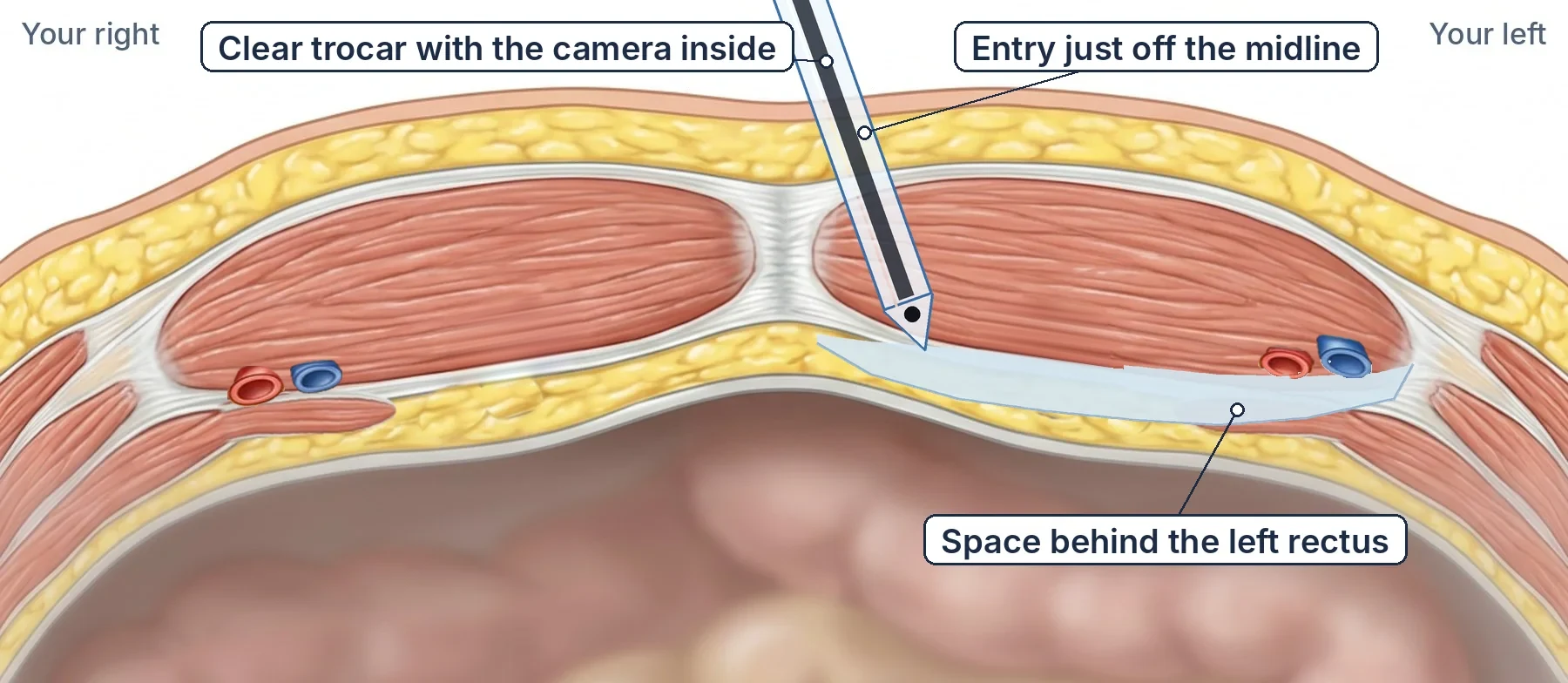
Entering behind the left rectus, high near the breastbone, with the camera inside a clear trocar. 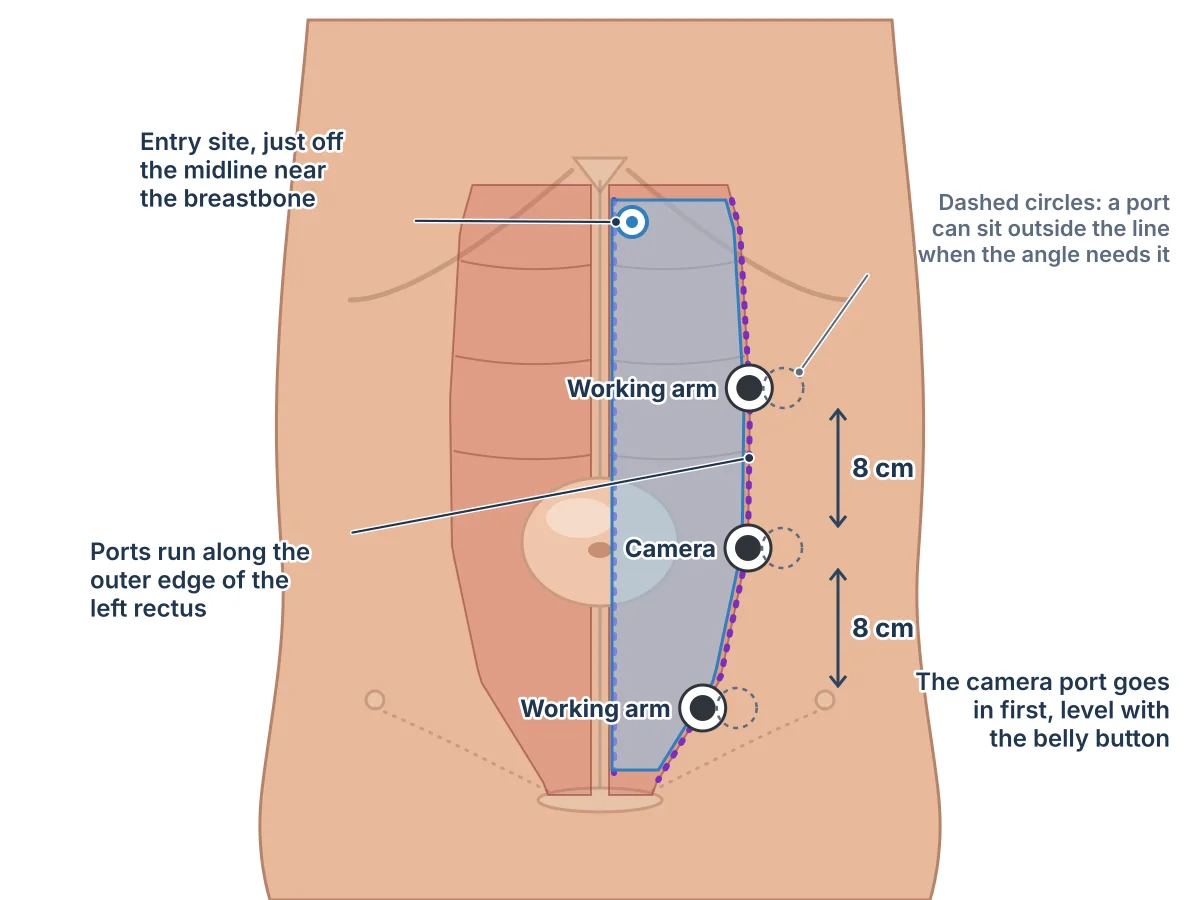
The entry site near the breastbone and the three ports along your left rectus. Open the left space out to the nerves
. I separate the rectus from the back layer. The epigastric vessels stay up with the muscle, and the nerve bundles coming in from the side show me how far out to go.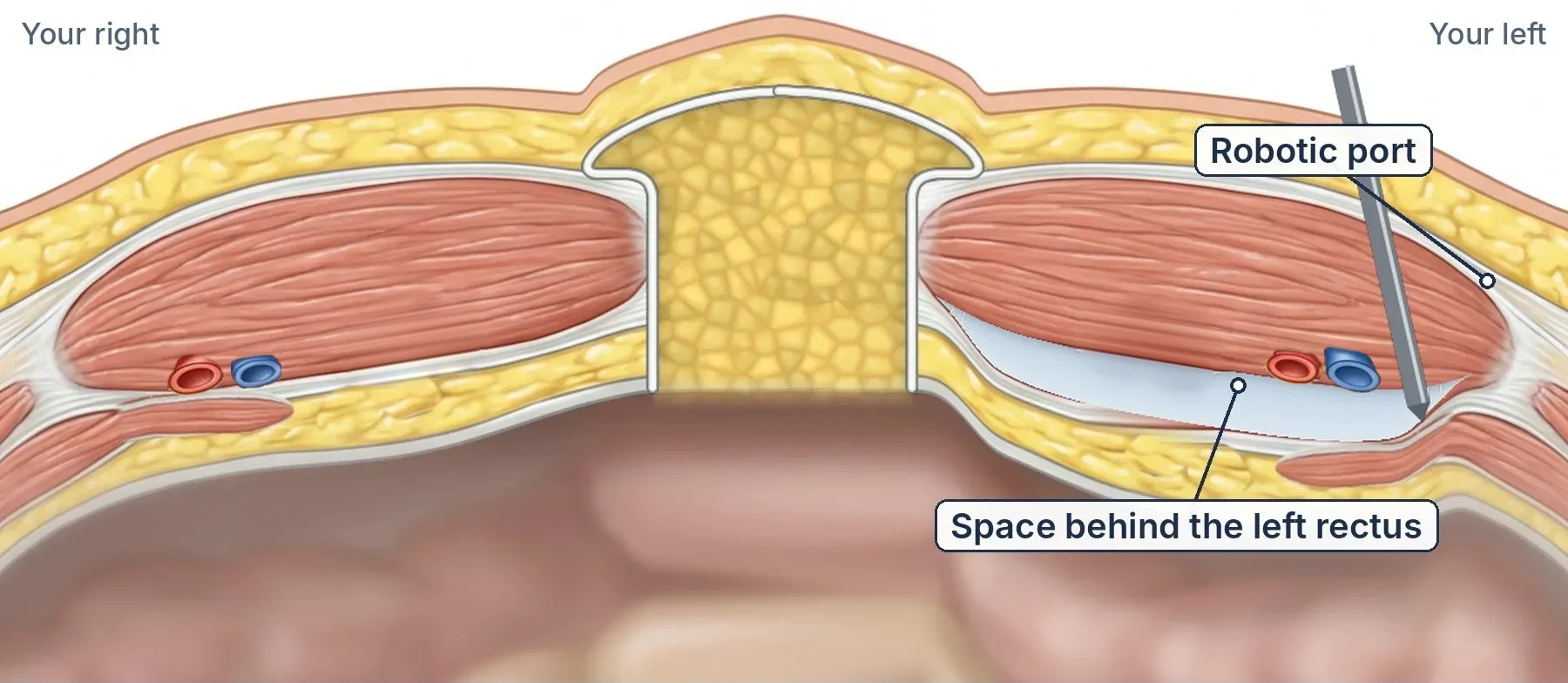
The space behind your left rectus. The crossover, and the hernia goes back in
. To reach your right side, I cut the back layer just beside the linea alba. As I cross under the hernia, I reduce it back into the abdomen, then open the space behind the right rectus.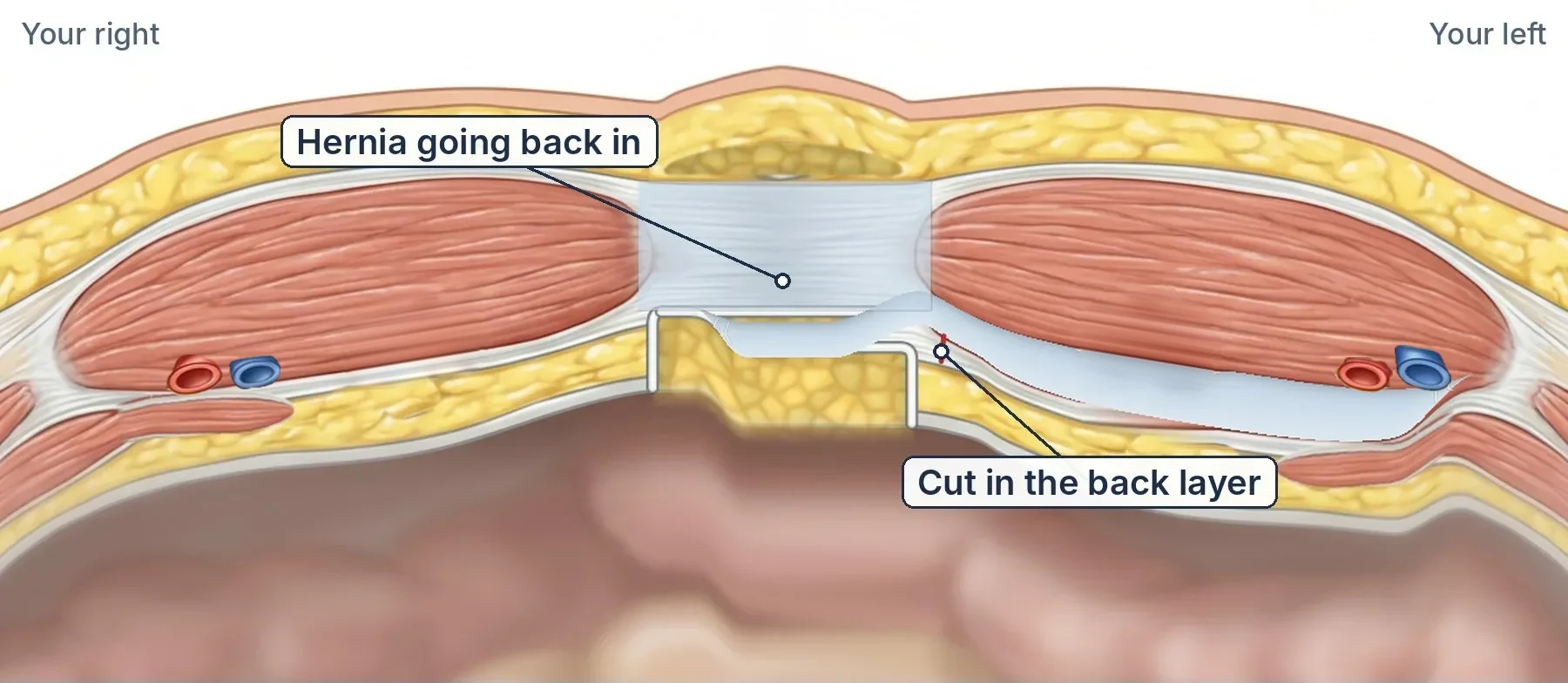
The crossover: the back layer cut beside the linea alba, and the hernia going back in. 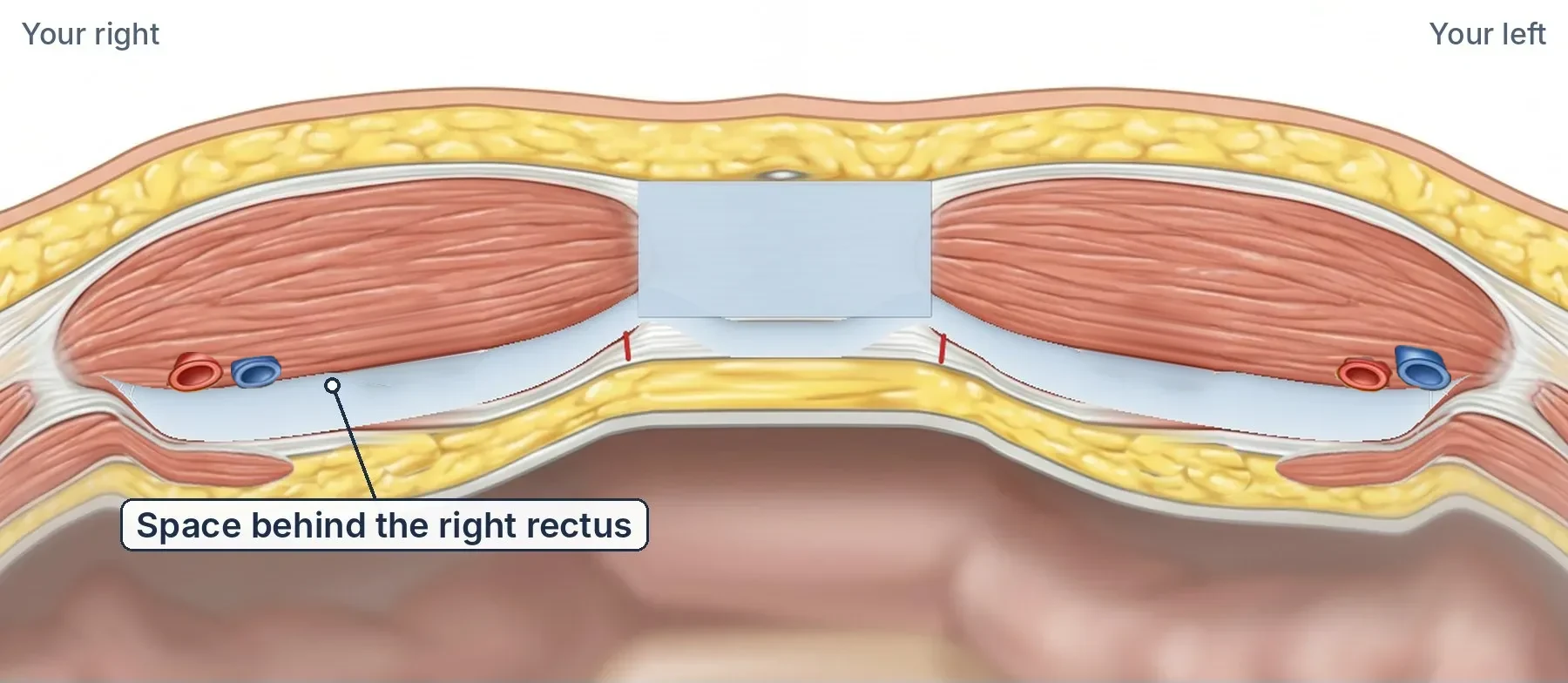
The space behind your right rectus. Close the holes in the back layer
. I do not sew the two back layers together. I look over the space between the two rectus muscles for holes, such as where the hernia sac was, and close them so the bowel stays on its side of the repair.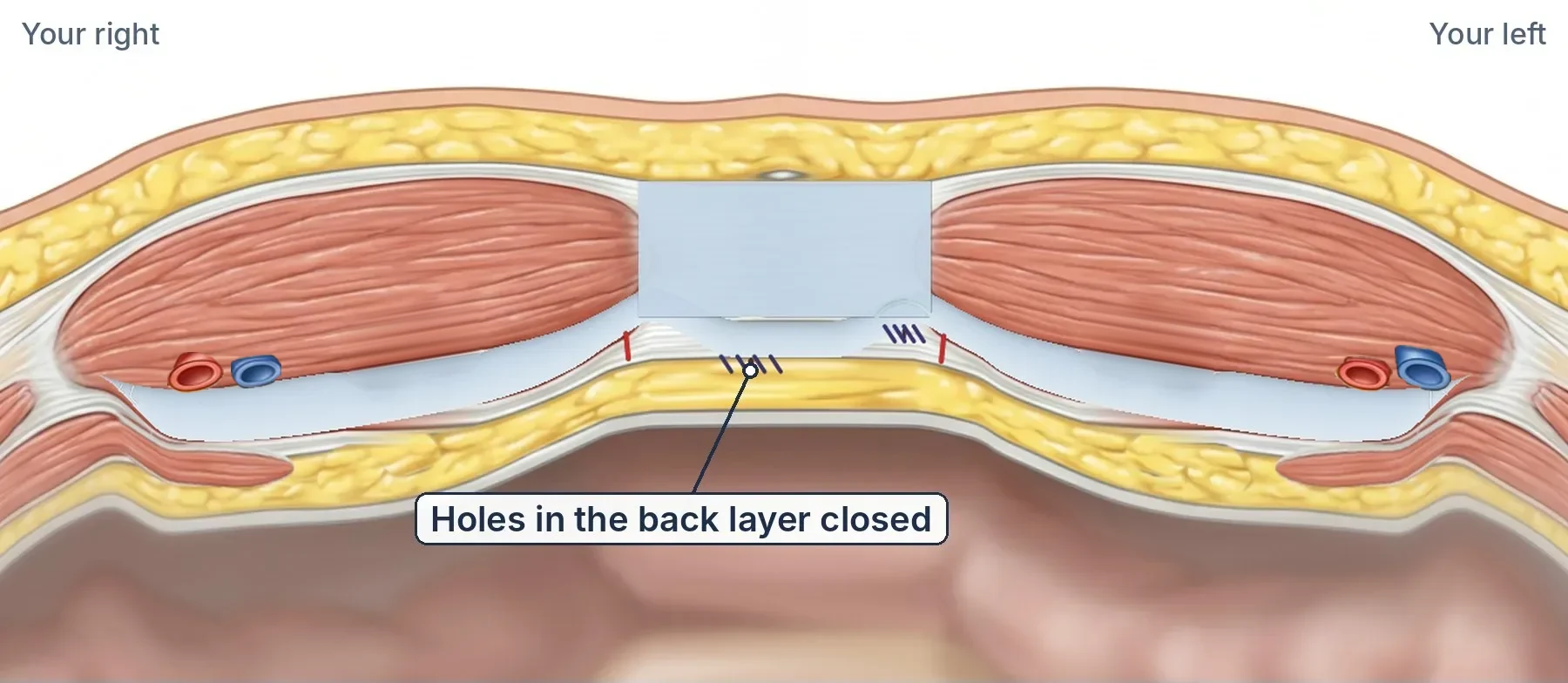
Closing a hole in the back layer. Close the middle
. The rectus muscles come back together and the linea alba is rebuilt.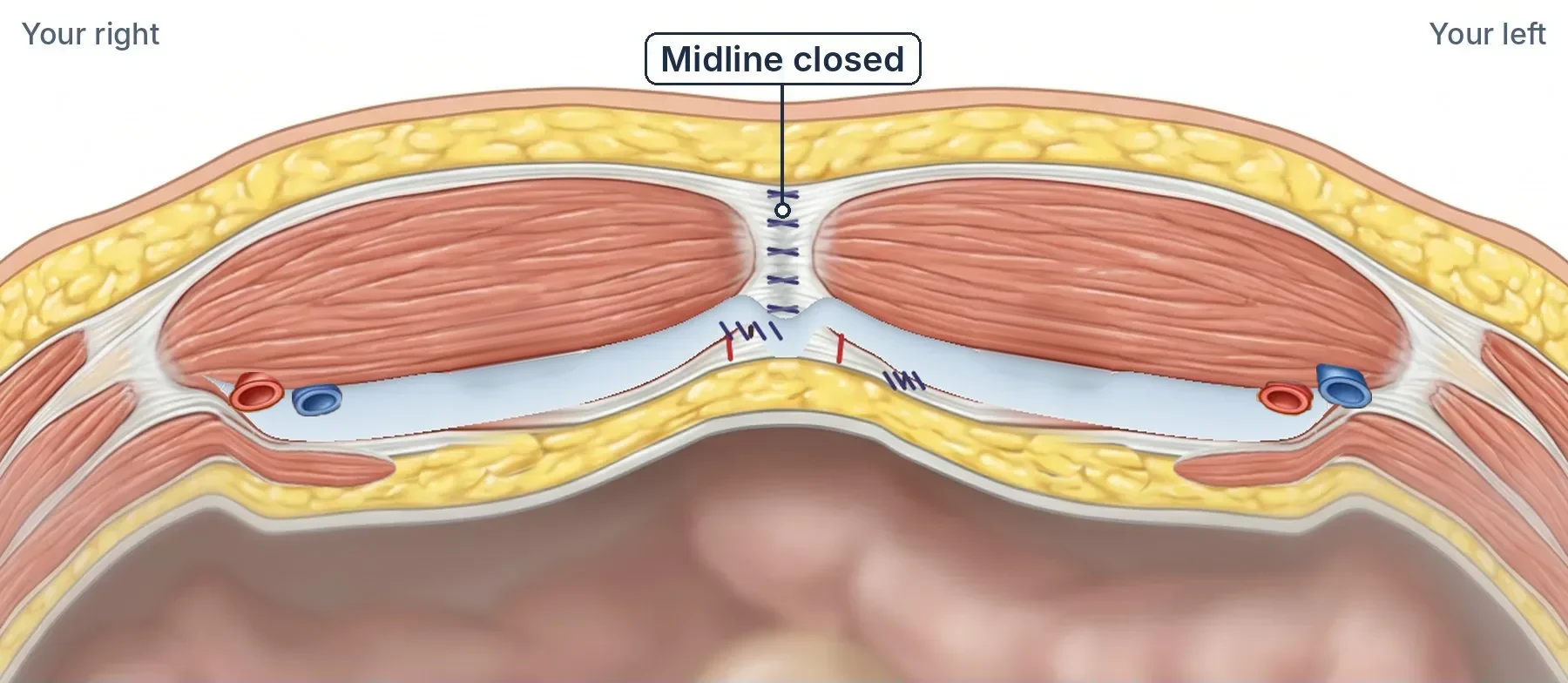
Closing the middle and rebuilding the linea alba. Place the mesh
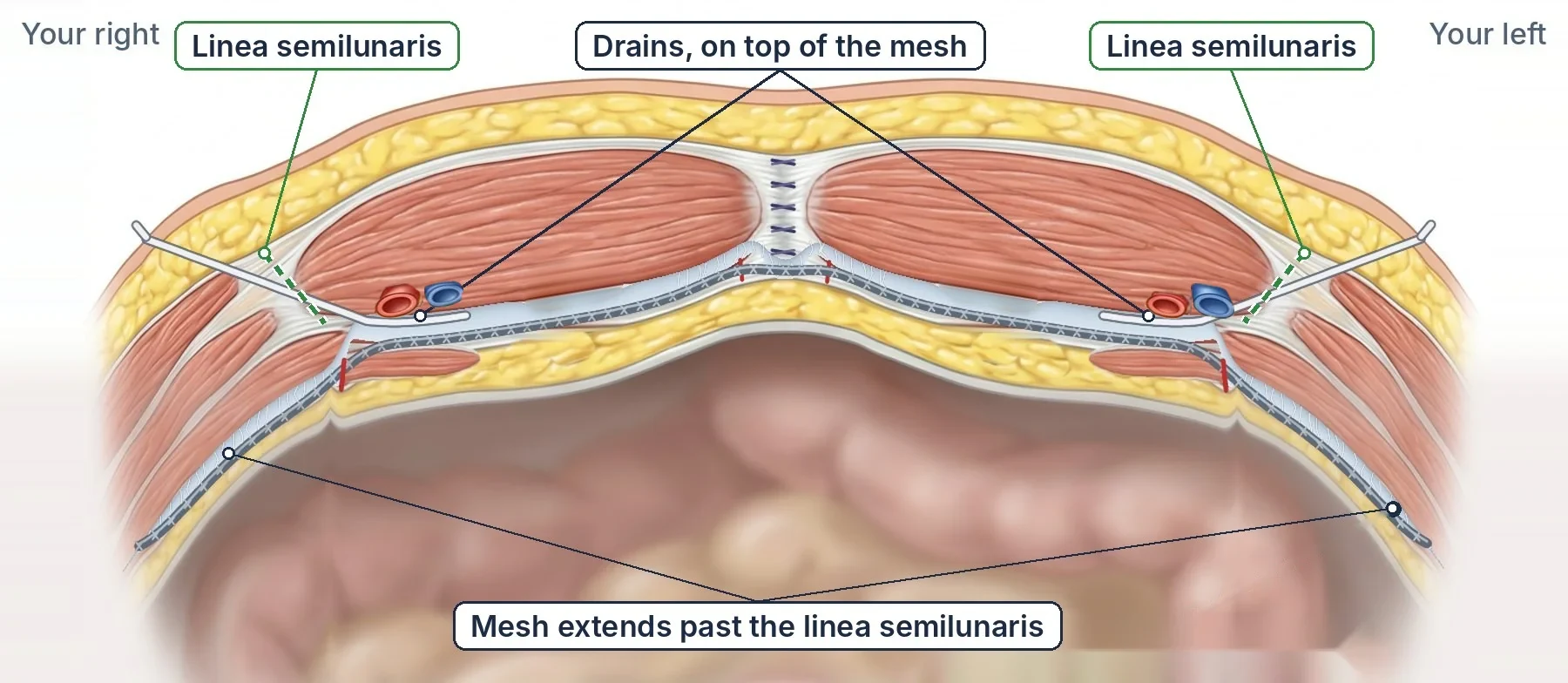
. A large mesh lies flat behind both rectus muscles. I bring it in from one side and lay it across to the other. When the gas is let out, the muscles rest against the mesh.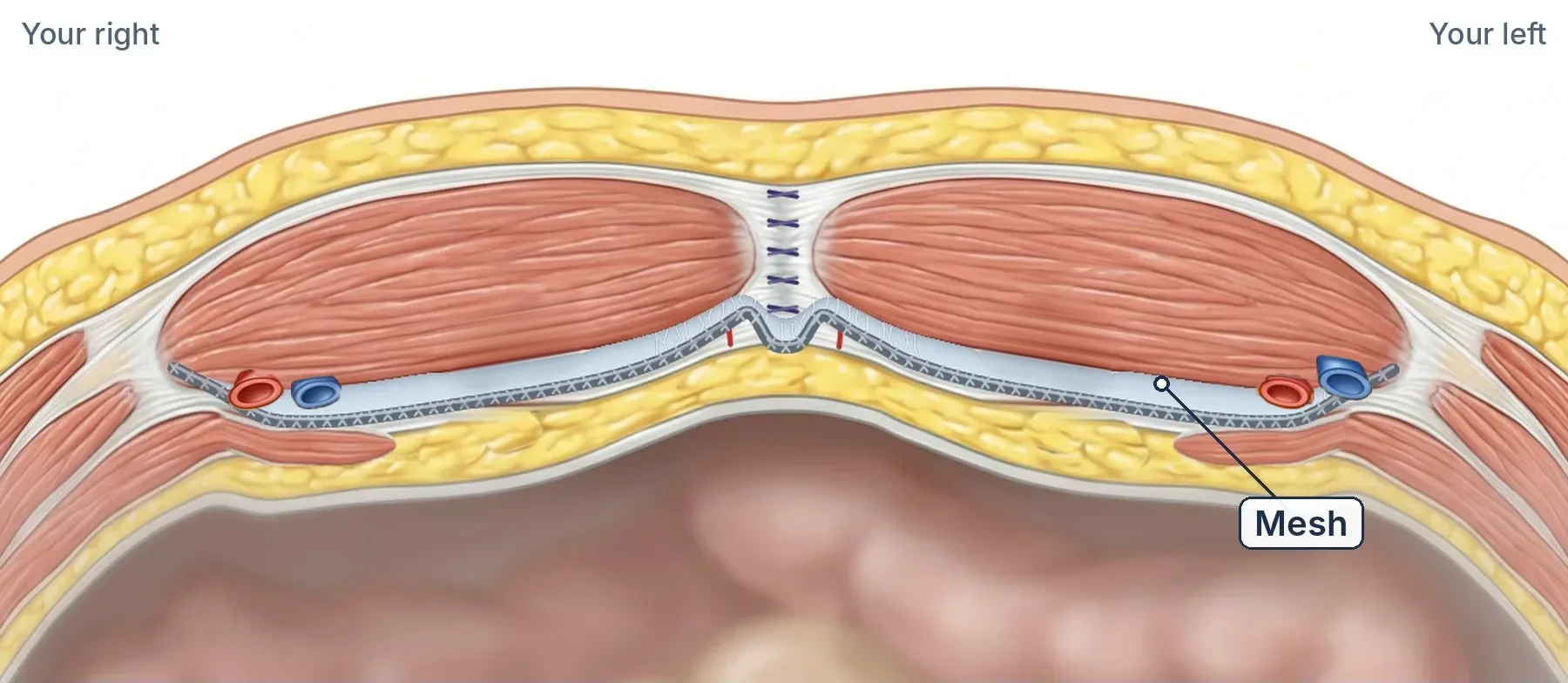
The mesh lying flat behind the muscles.
When do I add a TAR to a robotic repair?
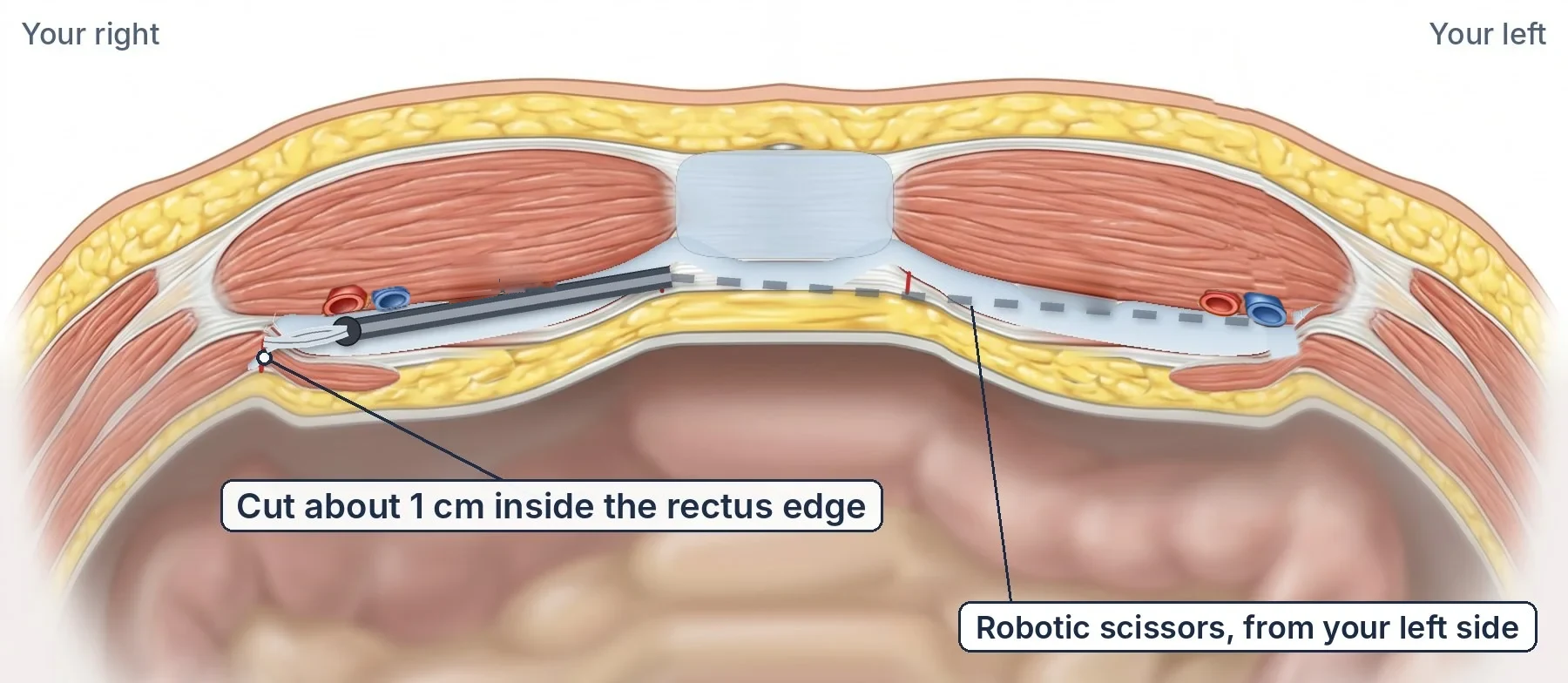
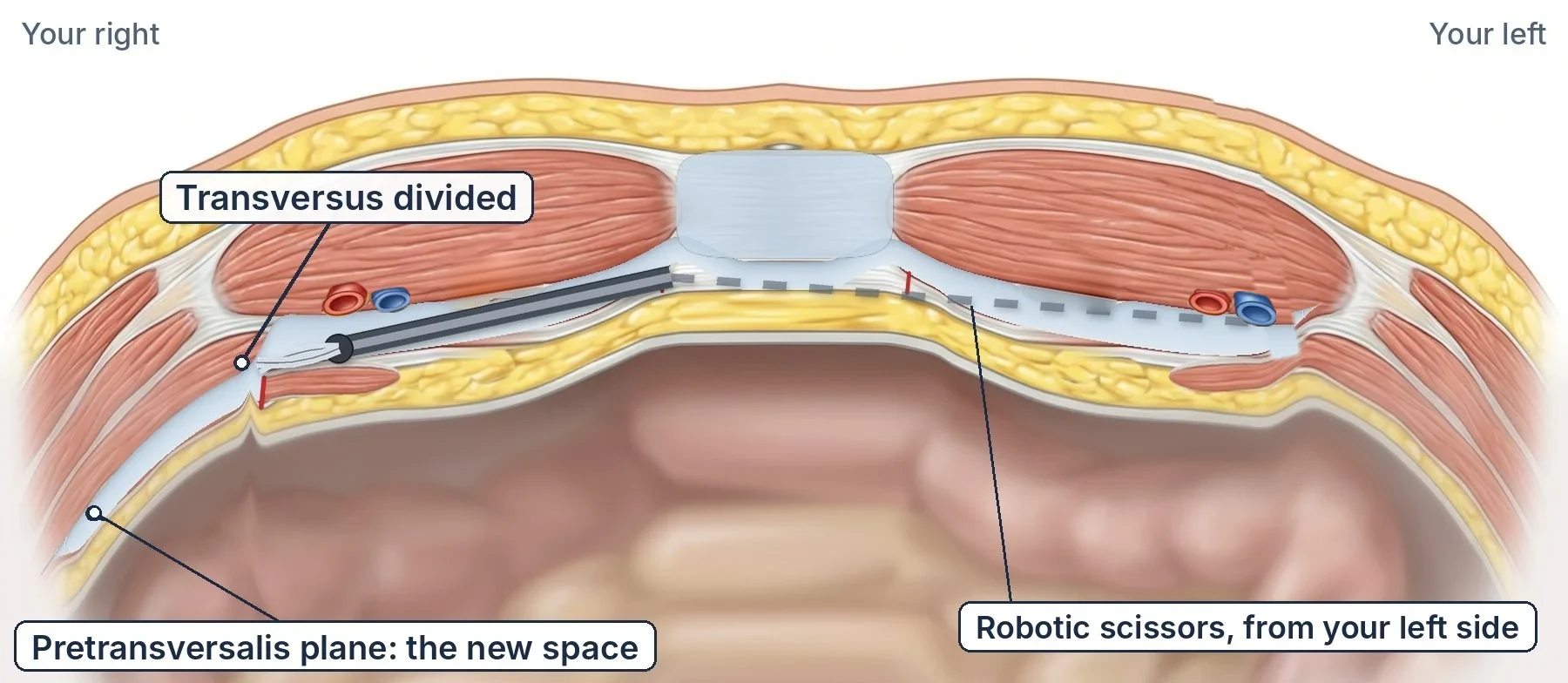
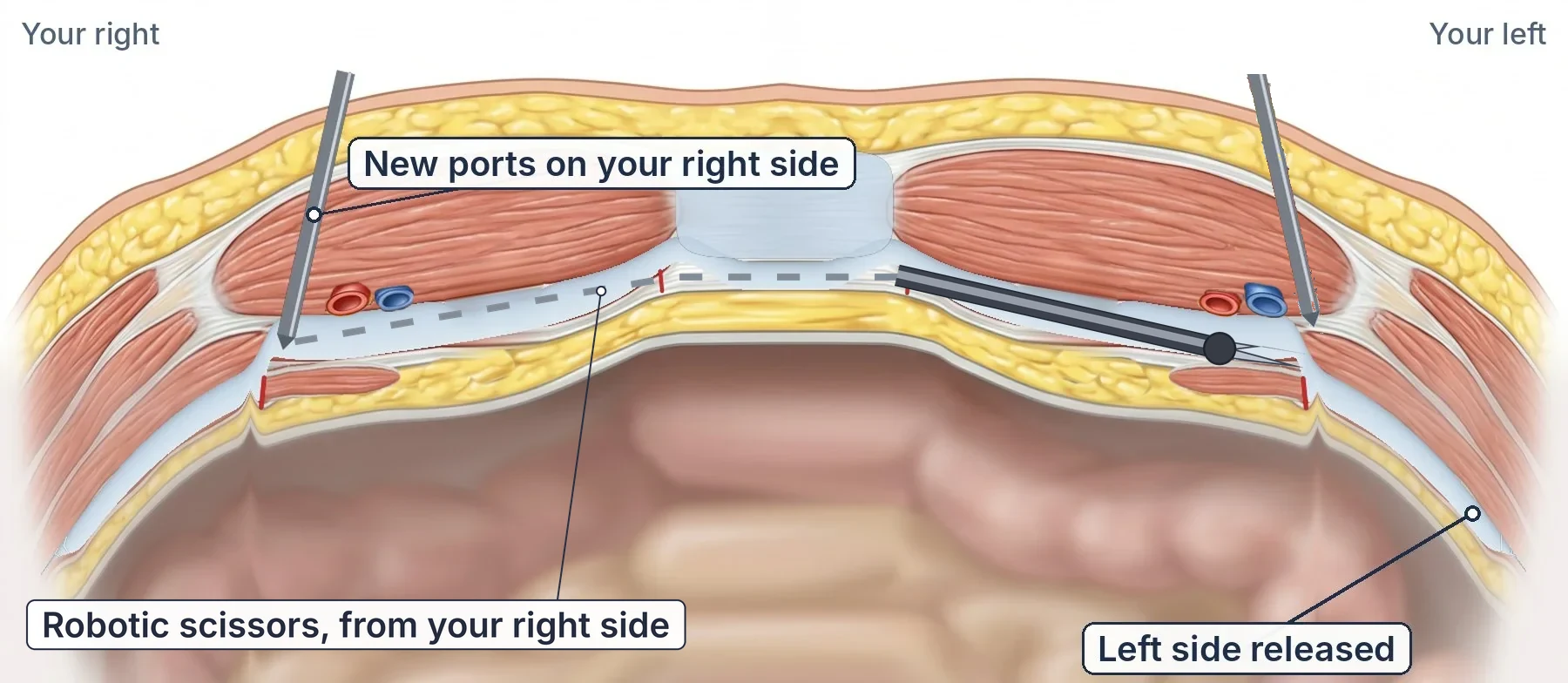
If the muscles cannot come together in the middle without too much tension, I add a transversus abdominis release (TAR). I start on your right side from my usual setup on your left: I cut the back layer about 1 cm inside the outer edge of the right rectus, divide the right transversus muscle, and work in the pretransversalis plane, the space in front of the thin transversalis fascia, out toward your side. To release your left side, I need a double dock: I move the robot and place new ports on your right side, while the ports on your left stay in. Then I repeat the same release on your left.
 Video coming soon
Special situations in robotic repair
What if I already have mesh from an earlier repair?
A robotic repair is often still possible. It depends on where the old mesh sits and what kind it is, which your CT scan helps show. A plastic surgeon can also remove loose, overhanging skin (a panniculectomy) during a robotic repair.
Could my robotic repair change to open?
Sometimes I cannot finish the operation robotically. If so, I change to an open repair. If that happens, your hospital stay may be longer than one night.
Why choose robotic eTEP?
- Smaller incisions, often less pain and a better cosmetic result
- A clear, magnified view for precise reconstruction
- Wide mesh coverage for a durable repair
- Mesh stays outside the abdominal cavity, lowering the chance it sticks to the bowel
- Most patients home after one night
What the research shows on eTEP
In the first report of eTEP for ventral hernias, 79 patients from five centers stayed in the hospital 1.8 days on average, and one hernia came back during about 11 months of follow up.1 When studies compared eTEP with mesh placed inside the abdomen, eTEP patients had less pain one week after surgery and went home sooner, with no difference in complications or the hernia coming back.2
What risks are specific to robotic eTEP?
The risks shared by every abdominal wall reconstruction, including bleeding from the epigastric vessels, nerve injury at the side, and a bulge on the side, are explained with drawings on the overview page. These are specific to the robotic approach:
- Entry and ports. The entry near the breastbone and the ports along the outer edge of your left rectus pass close to the epigastric vessels and the side nerve bundles. Ultrasound marking is how I place them safely.
- Injury during the crossover. Bowel or other contents of the hernia can be injured while the hernia is reduced. If this happens, I repair it, and your recovery may take longer.
- Changing to open. See above.
How long is the hospital stay after robotic eTEP?
- Most patients stay one night. If the operation changes to open, the stay is longer.
- You will be out of bed the day of surgery. Physical and occupational therapy see you if needed, depending on how well you were getting around before surgery.
- The bladder catheter placed during surgery comes out the next morning.
- Home medicines usually restart on day 1; blood thinners typically on day 2, coordinated with your other doctors.
- If a drain is placed, it comes out once it puts out less than 30 cc (about 2 tablespoons) in 24 hours.
- Before you go home: pain controlled with pills, eating and drinking, and passing urine after the catheter comes out.
What is recovery like at home after robotic eTEP?
You will leave the operating room with an abdominal binder; it is worn for comfort. Shower the day of surgery. Nothing over 10 pounds for 4 weeks. No soaking for 4 weeks. The full pain plan, wound care, activity limits, and when to call are on the overview page and in your printed guide (the Patient Guide button below).
Sources
- Belyansky I, et al. A novel approach using the enhanced-view totally extraperitoneal (eTEP) technique for laparoscopic retromuscular hernia repair. Surg Endosc. 2018;32(3):1525-1532. PubMed
- Chuah YHD, et al. IPOM versus eTEP as minimally invasive approaches for ventral/incisional hernias: a systematic review and meta-analysis. Hernia. 2025;29(1):144. PubMed