Recovery looks different for every procedure
Because recovery depends heavily on which surgery you've had, the most detailed guidance lives on each condition's own page — that's where you'll find specific pain control plans, activity restrictions, and wound care instructions. Below are the themes that show up across nearly every procedure Dr. Rodriguez performs.
Pain control
Most procedures use a layered approach: scheduled Tylenol (acetaminophen), an anti-inflammatory like Celebrex (celecoxib), a muscle relaxant Robaxin (methocarbamol), and a narcotic reserved only for breakthrough pain. Many patients also receive a nerve block before or during surgery that can control pain for up to 72 hours. The goal across the board is good comfort with as little narcotic use as possible.
Wound care
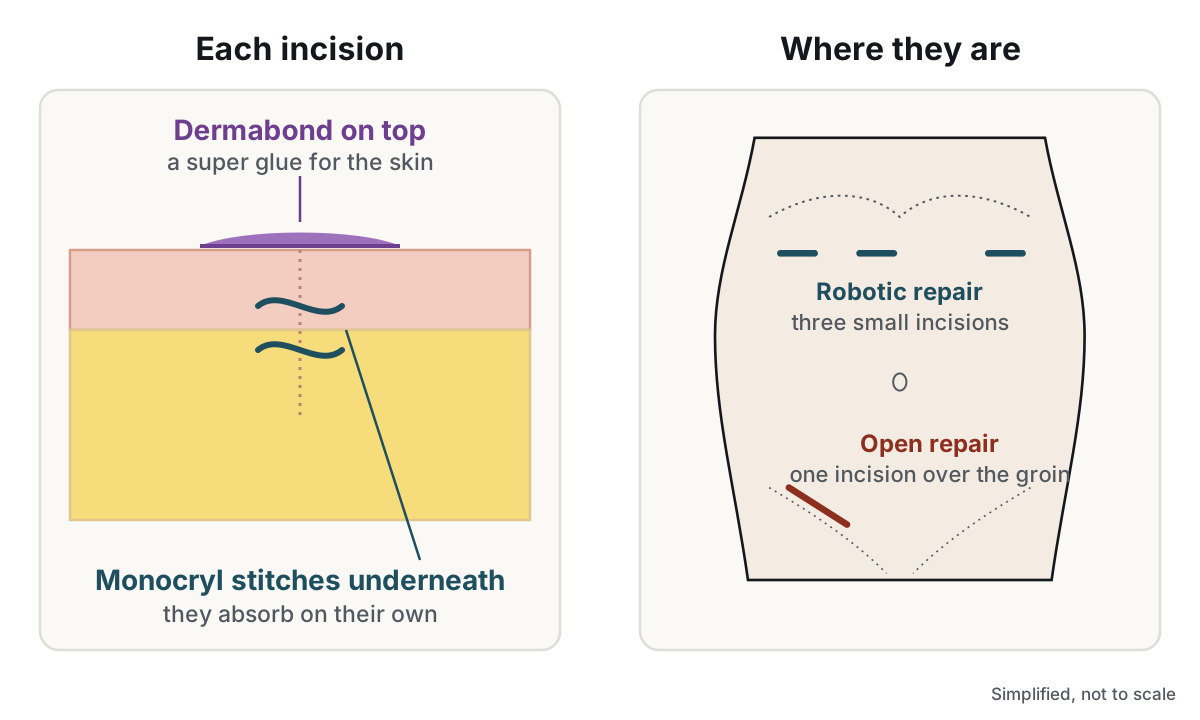
- Incisions are usually closed with dissolvable stitches under the skin and sealed with a waterproof surgical glue (Dermabond).
- You can typically shower the day of surgery — let water run over the incision and pat dry, rather than rubbing.
- Do not submerge incisions in a pool, tub, or other body of water for at least 4 weeks, until you're cleared at your follow-up visit.
- Keep incisions out of direct sunlight for 6 months. Young scar tissue sunburns easily and can discolor permanently.
Activity
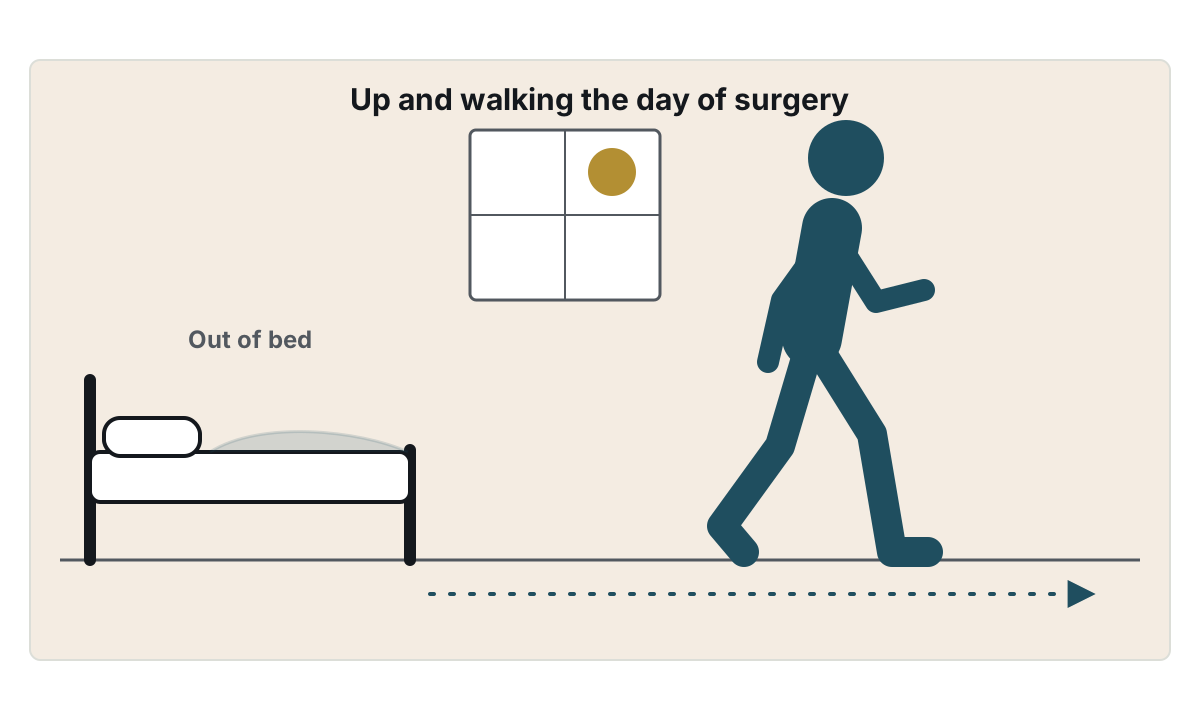
Walking is encouraged starting the day of surgery for almost every procedure — movement helps recovery. Nothing over 10 pounds until your 2 week visit, when we reassess. After abdominal wall reconstruction, nothing over 10 pounds for 4 weeks. Core exercise is usually restricted longer than general activity. You can resume driving when no longer taking narcotic / sedating medications and you can quickly go from gas to brake pedal without pain inhibiting your movement.
Build your recovery timeline
Pick your procedure to see the typical week-by-week milestones. This is a general guide built from the averages on this site — your written post-op instructions and Dr. Rodriguez's advice always override this chart.
Need a Mulligan?
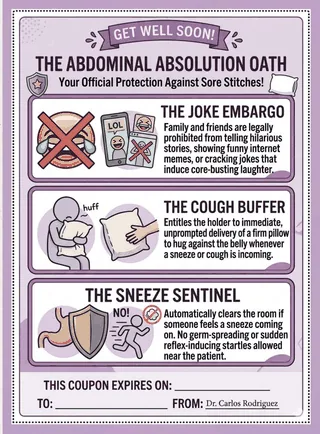
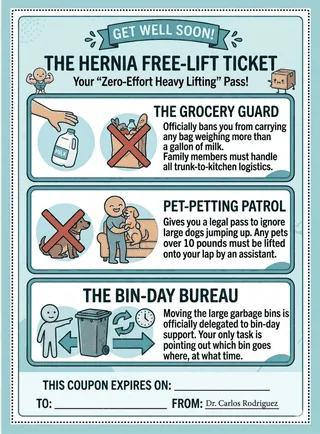
⛳ Recovery Perks, Doctor's Orders
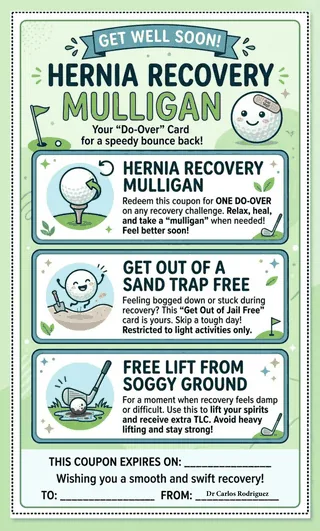
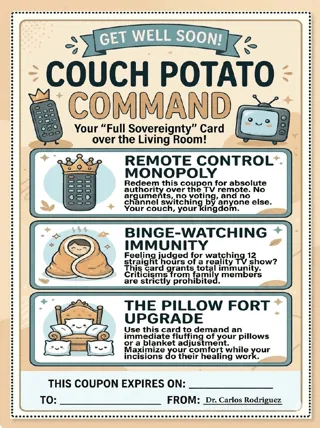
Recovery doesn't mean you can't have a little fun with it. Dr. Rodriguez made a few tongue-in-cheek "Doctor's Orders" cards you can print and use on family, friends, or your golf buddies during your recovery window — no cash value, no refunds, just good-natured permission to take it easy. Tap any card below for the full, printable version.
When to call the office
If it's after hours, your call will be routed to our answering service. The on-call surgeon or PA will receive your message and contact you.
For uncontrolled pain, shortness of breath, chest pain, or an inability to keep fluids down, seek urgent medical attention right away rather than waiting for office hours.