I go over recovery at the visit before surgery, not on the day you go home. That way you know what you can and cannot do before you choose a surgery date. Most of my patients go home the same day as their robotic gallbladder surgery.
Activity and lifting
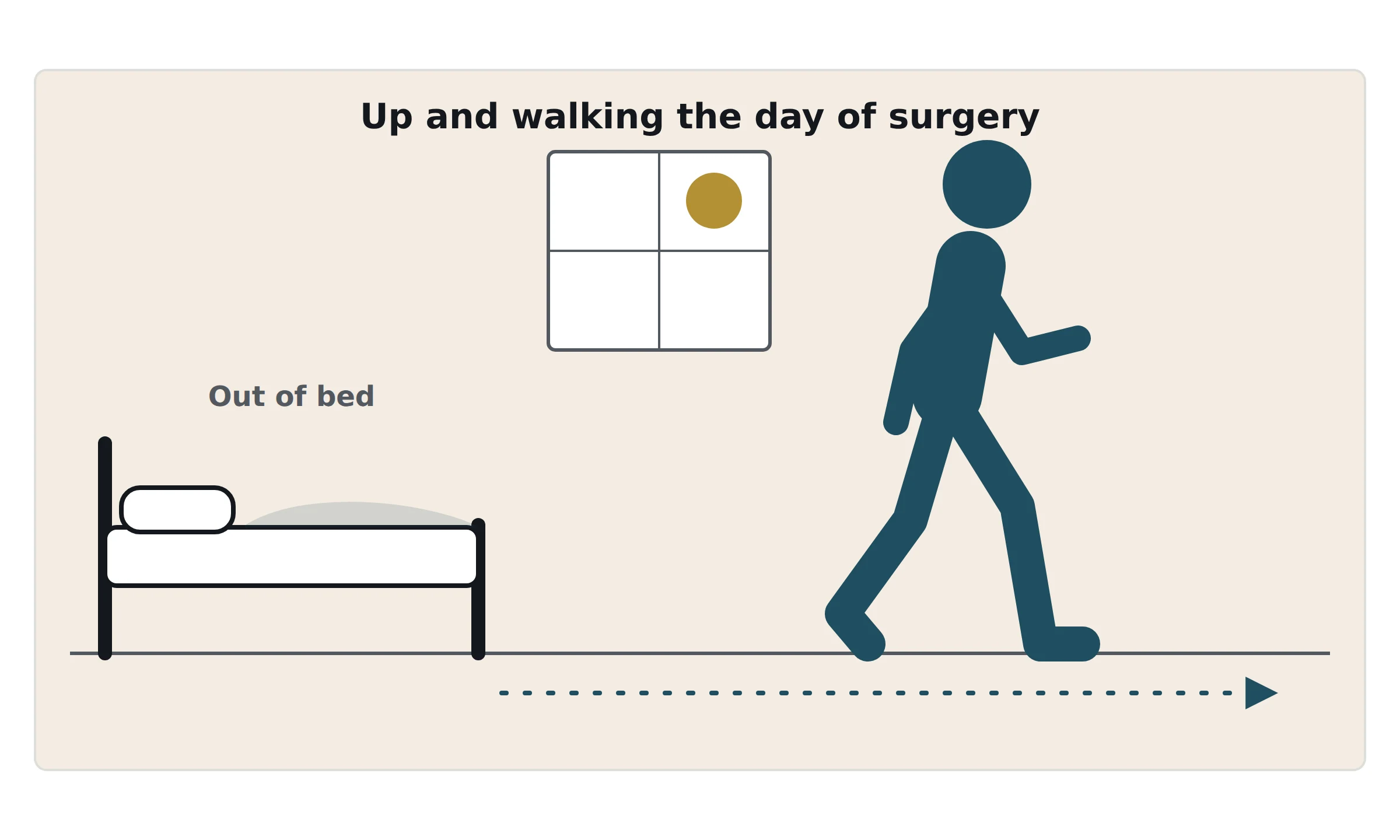
Get up and walk the day of surgery. Walking is the best thing you can do for your recovery. Start with short walks and make them a little longer each day.
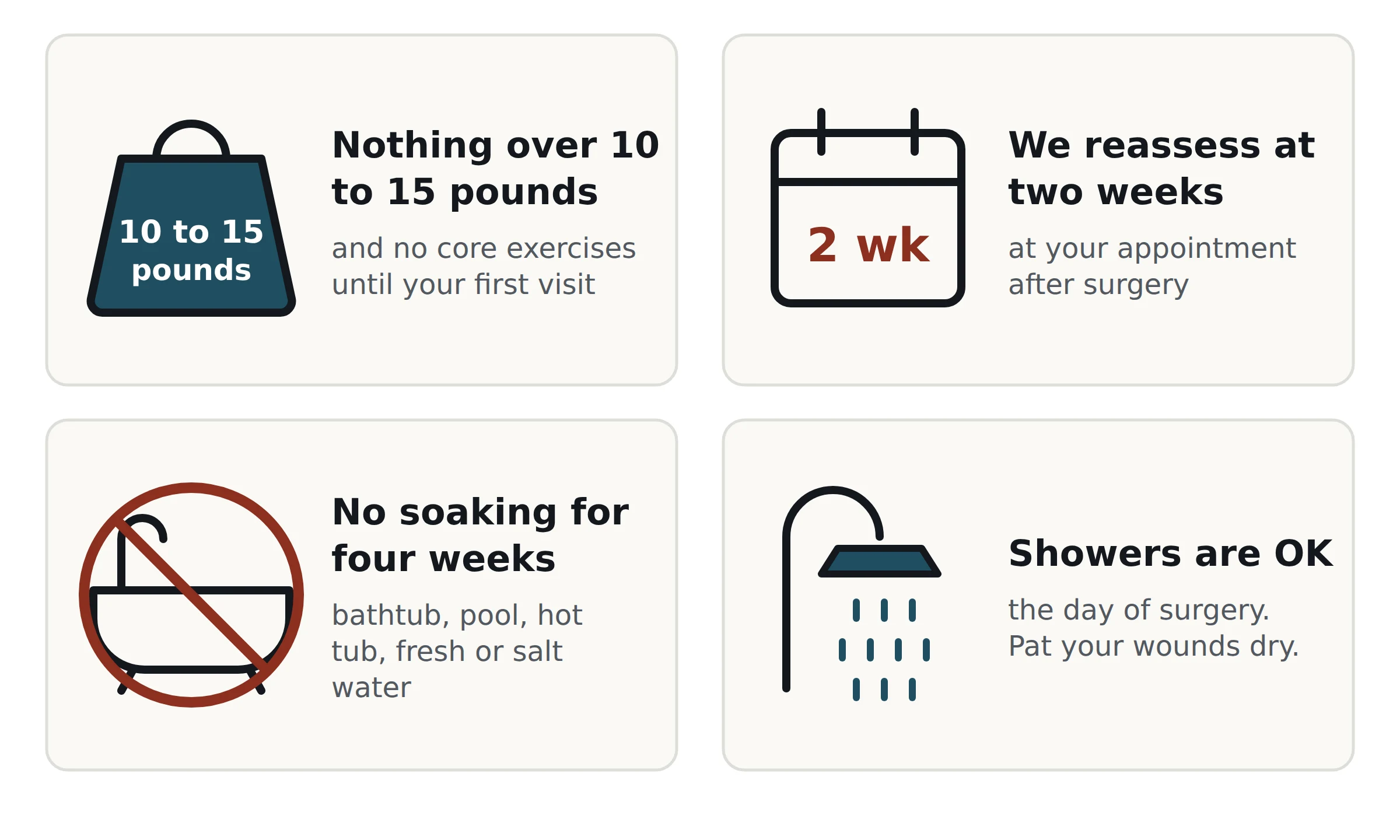
Until your first visit after surgery, do not lift anything heavier than 10 to 15 pounds, and skip core exercises. A gallon of milk weighs a little over 8 pounds, which gives you a sense of the limit. We look at how you are doing at that first visit and can give you a better idea of when you can remove lifting restrictions.
For everything else, let pain guide you. If something hurts, do not do it.
Showering and incision care
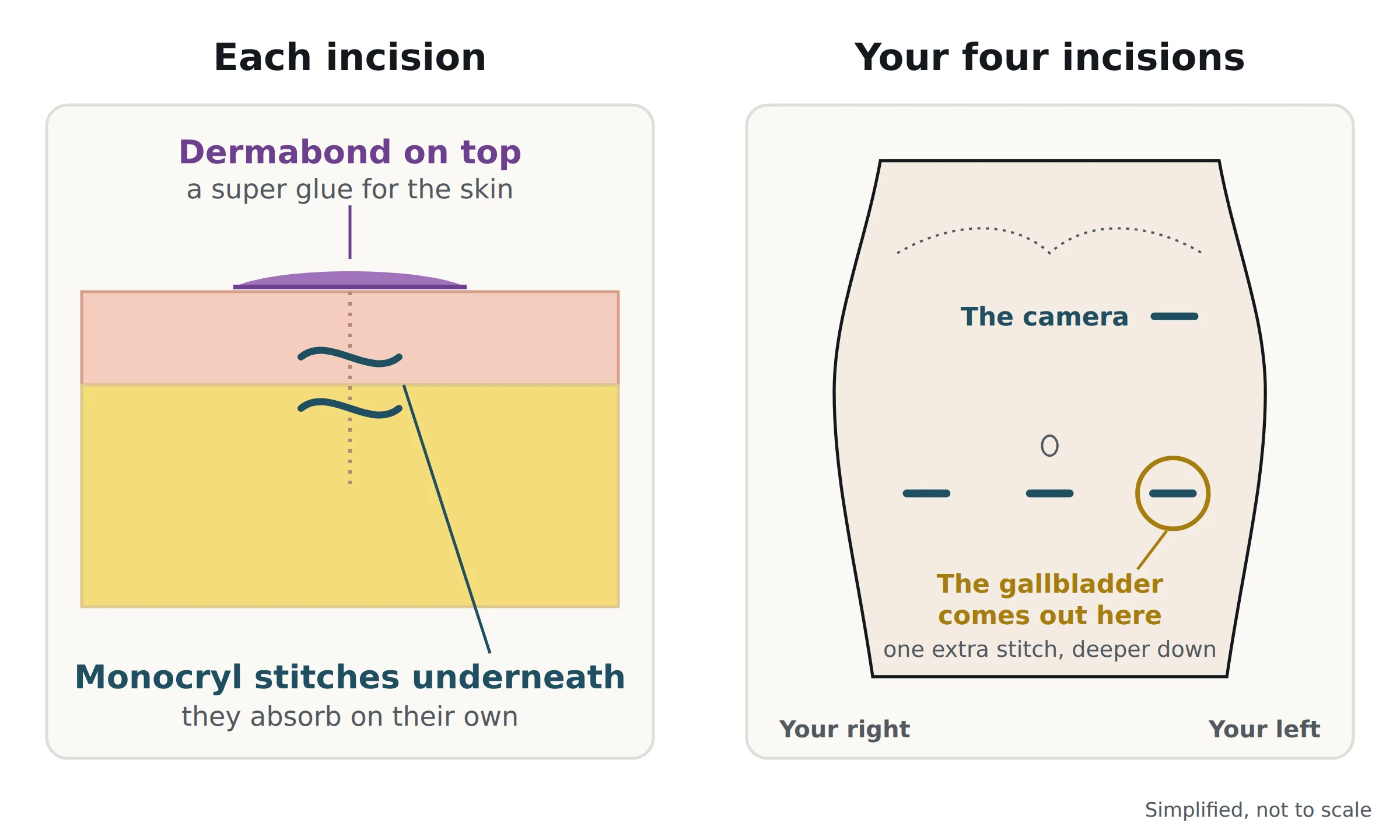
You can shower the day of surgery. Your incisions are closed with stitches under the skin that dissolve on their own, and the skin is sealed with a waterproof surgical glue. Let the water run over the incisions and pat them dry. Do not rub them. The glue may start to peel at the edges. Leave it alone.
Do not soak your incisions for four weeks. That means no bath, pool, hot tub, lake, or ocean. Running water over the incisions is fine. Sitting in water is not.
The incision just to the left of your navel is usually the sore one. That is where the gallbladder comes out, and it has an extra stitch deeper down.
Keep your incisions covered when you are outside for six months, or use sunscreen on them. A new scar burns easily, and the sun can darken it permanently.
Driving
There is no set day when you can drive, because recovery varies too much from one person to the next. You can drive once you are off narcotic pain medicine and can move your foot from the gas pedal to the brake quickly without pain slowing you down.
Shoulder pain after surgery
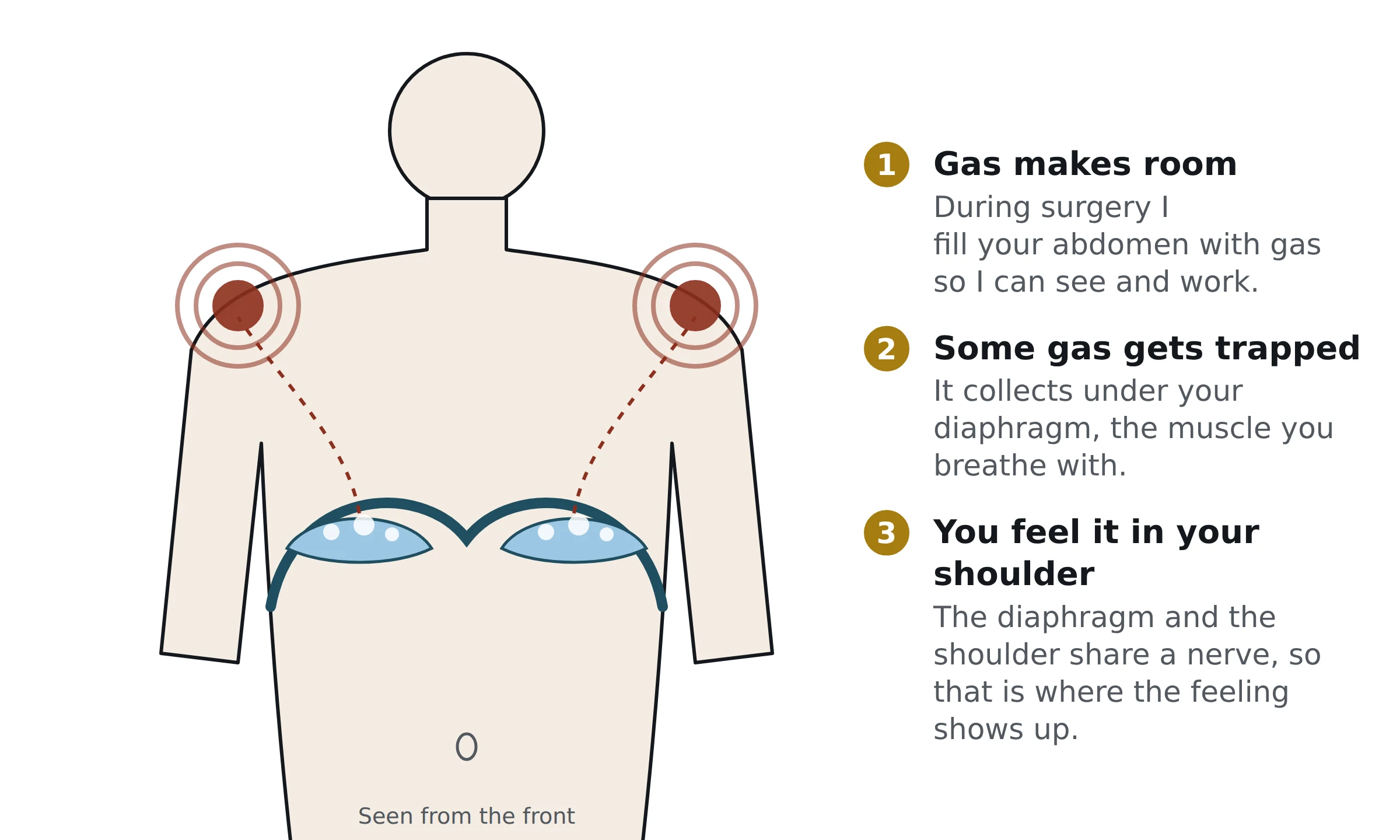
Pain in the shoulder surprises many people after abdominal surgery. During surgery I fill your abdomen with gas so I can see and work. Some of that gas gets trapped under your diaphragm, the muscle you breathe with. The diaphragm and the shoulder share a nerve, so that is where you feel it. This pain is expected, and it usually goes away in a day or two.
A dull ache under the right ribs
Some patients notice a dull ache under the right ribs after surgery. I think this comes from the instruments pressing against the ribs during the operation. It happens most often in people whose ribs sit low, where there is less room to work.
The robotic arm that holds the liver and gallbladder out of the way gives me no sense of touch, so I cannot feel that pressure as it happens. Once I have clearly identified the gallbladder's duct and artery, I change how I free the gallbladder so the arm pushes less on the liver and ribs. That lowers the chance of this ache.
Food
I covered diet in Post 12 of this series, published September 21, 2026: The Most Common Question I Get Is About Food. You do not need a special diet. Go back to your normal diet and add fatty meals back gradually.
When to call
Call the office at (817) 250-7030 if you have any of these after surgery:
- A fever over 101
- Yellowing of your eyes or skin
- Pain that is getting worse instead of better
- Nausea or vomiting that will not stop, or you cannot keep liquids down
- Redness, swelling, or drainage at an incision
After hours, your call goes to our answering service, and the on-call surgeon or PA will call you back. For pain you cannot control, chest pain, or shortness of breath, get urgent medical care right away rather than waiting for the office to open.
References
Recommendations reflect Dr. Rodriguez's standard postoperative counseling in clinical practice.
Dr. Rodriguez served as a speaker and educator for Intuitive Surgical through June 2025. He has no current financial relationship with the company.