The short version
- One incision in the groin, over the canal.
- The round ligament is removed, the internal ring is stitched closed, and one flat piece of mesh covers the floor of the canal.
- If there is also a femoral hernia, it is repaired through the same incision.
- A numb patch on the mound above the labia or the outer labia is possible. Most patients go home the same day.
A quick summary. The full details are below, and none of it replaces an exam.
What is an inguinal hernia?
An hernia happens when tissue, usually part of the intestine or surrounding fat, pushes through a weak spot in the lower abdominal wall, in the groin area. This creates a bulge, and often discomfort or pain, especially with lifting, coughing, or prolonged standing. Inguinal hernias are less common in women than in men, but they still happen, and they're sometimes overlooked because groin pain in women gets attributed to other causes first.
The inguinal canal in women
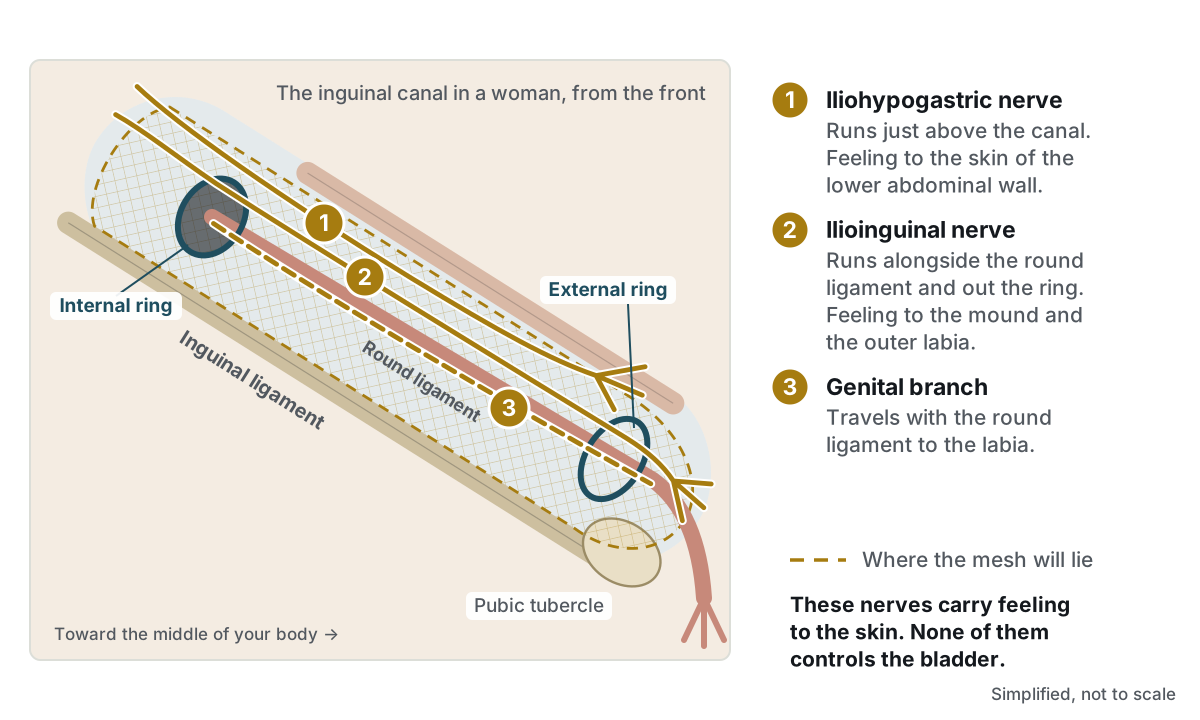
The inguinal canal is a short tunnel through the muscles of the lower belly wall, just above the crease of the groin. It runs from an opening on the inside, called the internal ring, to an opening under the skin, called the external ring. In men, the spermatic cord runs through it. In women, the round ligament runs through it: a thin cord of tissue that goes from the top of the uterus to the skin of the labia.
Three small skin nerves run through or beside the canal: the iliohypogastric nerve, the ilioinguinal nerve, and the genital branch of the genitofemoral nerve. They carry feeling to the skin of the lower belly, the mound above the labia, and the outer labia. Just below the canal, under the inguinal ligament, is the femoral space, where the large blood vessels to the leg pass. A femoral hernia comes through there.
Why inguinal hernias look different in women
In men, the inguinal canal carries the spermatic cord. In women, it carries the round ligament, a thin cord of tissue that runs from the uterus to the groin. That difference changes both how a hernia tends to form and what has to be protected during repair.
- Femoral hernias are more common in women. These sit just below the main inguinal canal, near the blood vessels that run into the thigh, and carry a higher risk of the trapped tissue losing its blood supply if left untreated.
- The can occasionally involve the ovary or fallopian tube. This is uncommon, but it's one reason imaging and a careful exam matter before surgery.
- The bulge itself is often smaller and harder to feel than in men, since there's no scrotum for it to extend into.
Why the diagnosis is sometimes missed
Groin pain in women is commonly attributed first to ovarian cysts, round ligament pain in pregnancy, endometriosis, or hip problems. Because the hernia itself can be subtle on exam, it sometimes takes longer to reach the right diagnosis than it would in a man with the same problem. If groin pain doesn't have a clear explanation, it's worth being evaluated specifically for a hernia.
Three types of hernia in this area
- Indirect inguinal hernia: comes through the internal ring, the opening the round ligament passes through, and follows the round ligament down the canal.
- Direct inguinal hernia: develops later in life from general wear and weakening of the floor of the canal.
- Femoral hernia: sits just below the inguinal canal, near the blood vessels that travel into the thigh. It is more common in women than in men, and more likely to become stuck.
How open repair works in women
The robotic repair lets me check the femoral space at the same time as the inguinal canal, which is one reason I usually recommend it for women.³ When an open repair is the better choice, this is how I do it.
Step by step
- Getting in: a single incision is made in the groin crease directly over the hernia.
- Opening the inguinal canal: the layers of tissue are opened to expose the inguinal canal, the round ligament, and the .
- Protecting the nerves: three nerves run through this area: the ilioinguinal, iliohypogastric, and genital branch of the genitofemoral nerve. They are identified and protected where possible, which lowers the risk of numbness or chronic pain afterward.
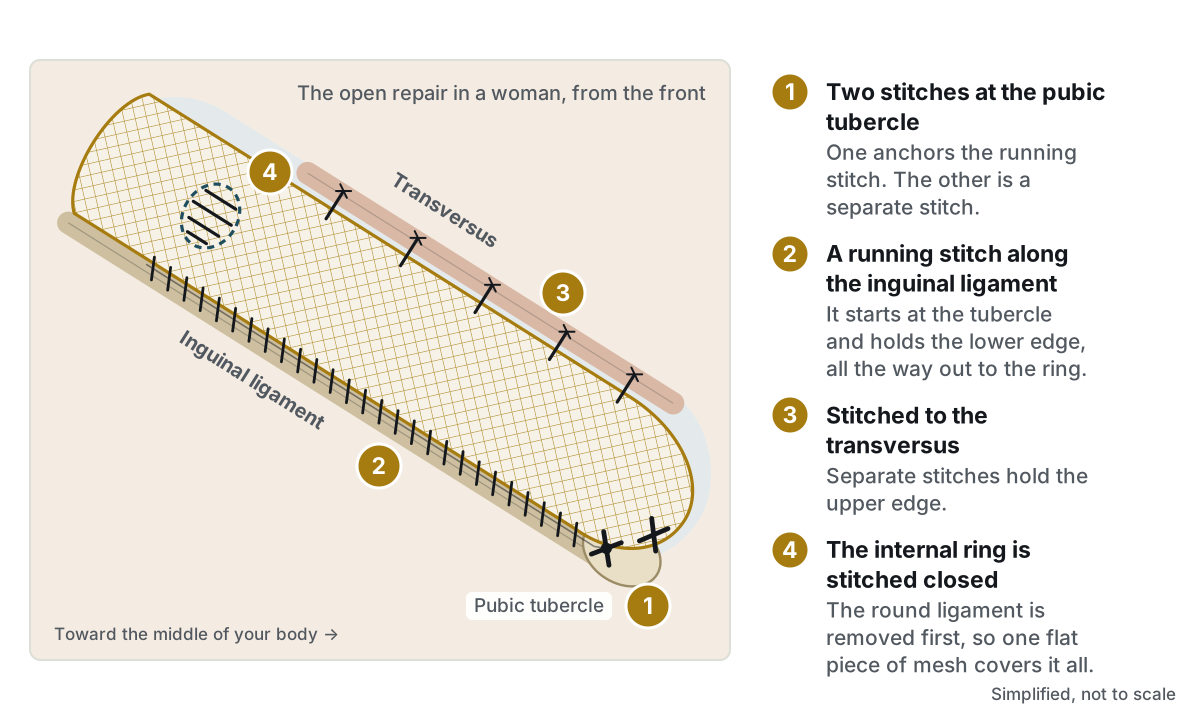
- Handling the round ligament: the round ligament is divided and removed from the canal.
- Reducing the hernia: the bulging tissue is gently freed and returned to the abdomen.
- Closing the internal ring: the internal ring is stitched closed.
- Placing the mesh: a flat synthetic mesh is laid over the floor of the inguinal canal and secured in place, reinforcing the weak area without tension. With the round ligament gone, the mesh needs no slit and no tails.
- Closing up: the layers of tissue are closed over the mesh, and the skin incision is closed with absorbable sutures placed deep to the skin and a waterproof skin glue (no staples or visible stitches to remove).
- Nerve block: a numbing medication is often injected to numb the groin nerves, reducing pain afterward and cutting down on the need for narcotics.
If there is also a femoral hernia
A femoral hernia comes through a small opening just below the inguinal ligament, beside the large vein to the leg. If I find one, I open the floor of the canal, push the hernia back, and stitch the floor down to a strong ligament on the pubic bone called Cooper's ligament. That closes the opening. This is called a McVay repair.
Will I have numbness afterward?
Two small skin nerves run through the canal: the ilioinguinal nerve, alongside the round ligament, and the genital branch, which travels with it. When I remove the round ligament, the genital branch comes out with it, and the ilioinguinal nerve is sometimes divided as well. Either one can leave a numb patch on the mound above the labia, on the outer labia, or on the upper inner thigh.
In studies of open hernia repair, dividing the ilioinguinal nerve caused more numbness in the first month, and by six months the difference was small or gone. The same studies found less pain after surgery when the nerve was divided.¹,² Most people in these studies were men. For some women the numb patch fades; for others it stays.
Possible complications
- Bleeding or infection, lowered by careful cautery, antiseptic skin prep, sterile technique, and antibiotics before surgery
- Nerve injury or chronic groin pain
- Injury to the spermatic cord structures (in men) or (in women), or to nearby blood vessels. Uncommon, but possible given the close anatomy in this region
- Hernia recurrence, lowered by making sure the mesh lies completely flat with no folds
- Numbness around the incision and on the mound above the labia or the outer labia (see above)
Pain control after surgery
Pain is managed with a combination approach so you need fewer narcotics:
- NSAIDs, such as Advil (ibuprofen) or Celebrex (celecoxib), to reduce inflammation
- Tylenol (acetaminophen) for pain and fever
- Robaxin (methocarbamol), a muscle relaxant
- Narcotics only if needed, for the shortest time possible
Recovery: what to expect
- Hospital stay: most patients go home the same day, with mild pain, swelling, or bruising.
- Activity: walk as tolerated; avoid anything strenuous.
- Lifting: nothing over 10 pounds until your 2 week visit, when we reassess.
- Wound care: you can shower the day of surgery, but do not submerge incisions in a pool, tub, or other body of water for at least 4 weeks. Incisions are closed underneath the skin and sealed with a waterproof glue.
- Sun protection: healing incisions sunburn easily and can discolor, sometimes permanently, so keep them covered.
For more information, see Recovery and getting back to life.
- Fever over 101°F
- Pain that medication doesn't control
- Redness, swelling, or drainage at an incision
- Trouble urinating or breathing
- Significant constipation
If it's after hours, your call will be routed to our answering service. The on-call surgeon or PA will receive your message and contact you.
For uncontrolled pain, shortness of breath, chest pain, or inability to keep fluids down, seek urgent medical attention right away rather than waiting for office hours.
References
1. Hu Q, Du YX, Wang DC, et al. Efficacy and safety of ilioinguinal neurectomy in open tension-free inguinal hernia repair: a meta-analysis of randomized controlled trials. Am J Surg. 2023;226(4):531-541. https://doi.org/10.1016/j.amjsurg.2023.06.027
2. Xu Z, Qu H, Kanani G, et al. The outcomes of routine ilioinguinal neurectomy in the treatment of chronic pain during herniorrhaphy: a meta-analysis of randomized-controlled trials. Asian J Surg. 2021;44(2):431-439. https://doi.org/10.1016/j.asjsur.2020.10.022
3. HerniaSurge Group. International guidelines for groin hernia management. Hernia. 2018;22(1):1-165. https://doi.org/10.1007/s10029-017-1668-x