A quick recap before we move forward. We have covered the anatomy of the biliary tree, the physiology of how bile is made and released, and how gallstones actually form. Now we are ready to talk about when stones start causing problems, and when they do not.
The whole thing comes down to one question: is the stone blocking the gallbladder's outlet, the cystic duct? When a stone lodges there during a squeeze, you get pain. When they don't block the outlet, they stay silent, often for a lifetime.
When Stones Cause Pain
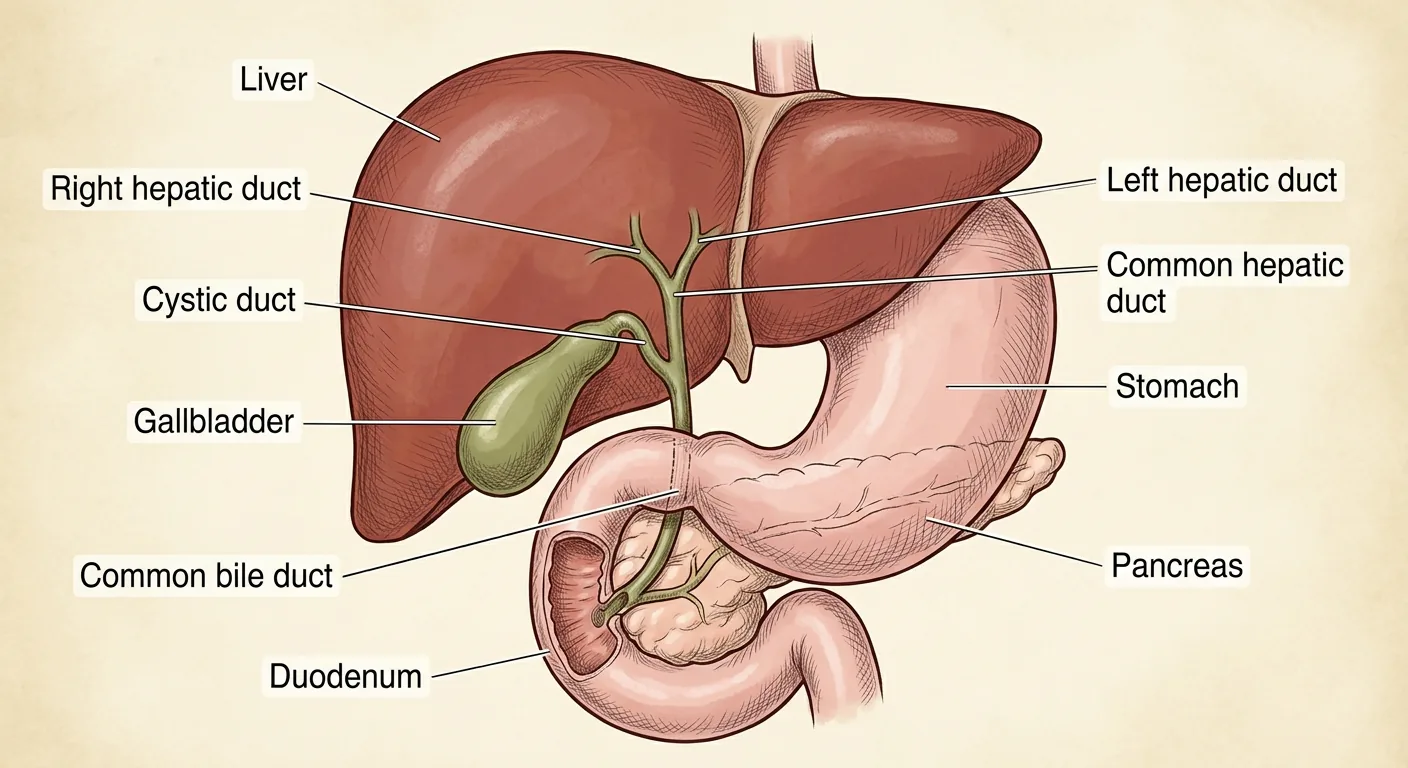
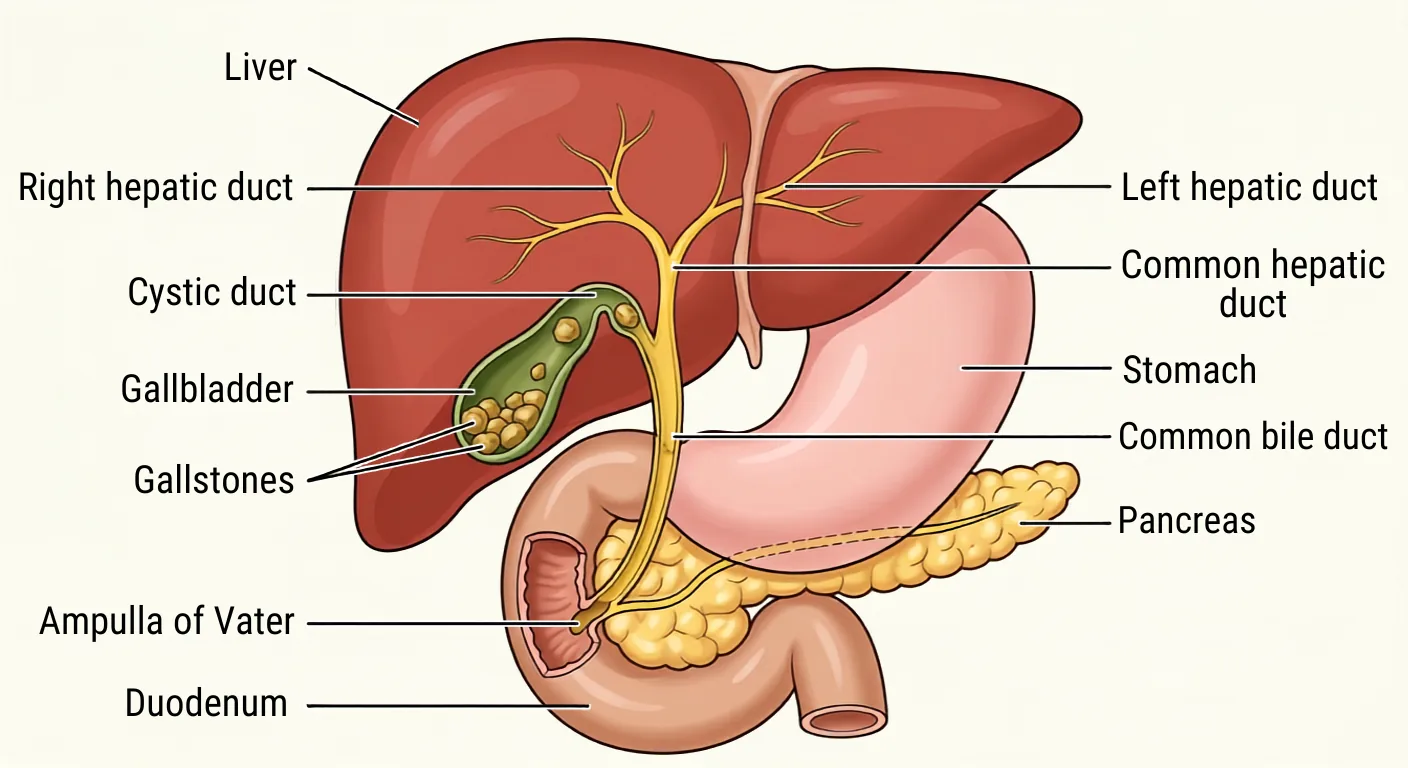
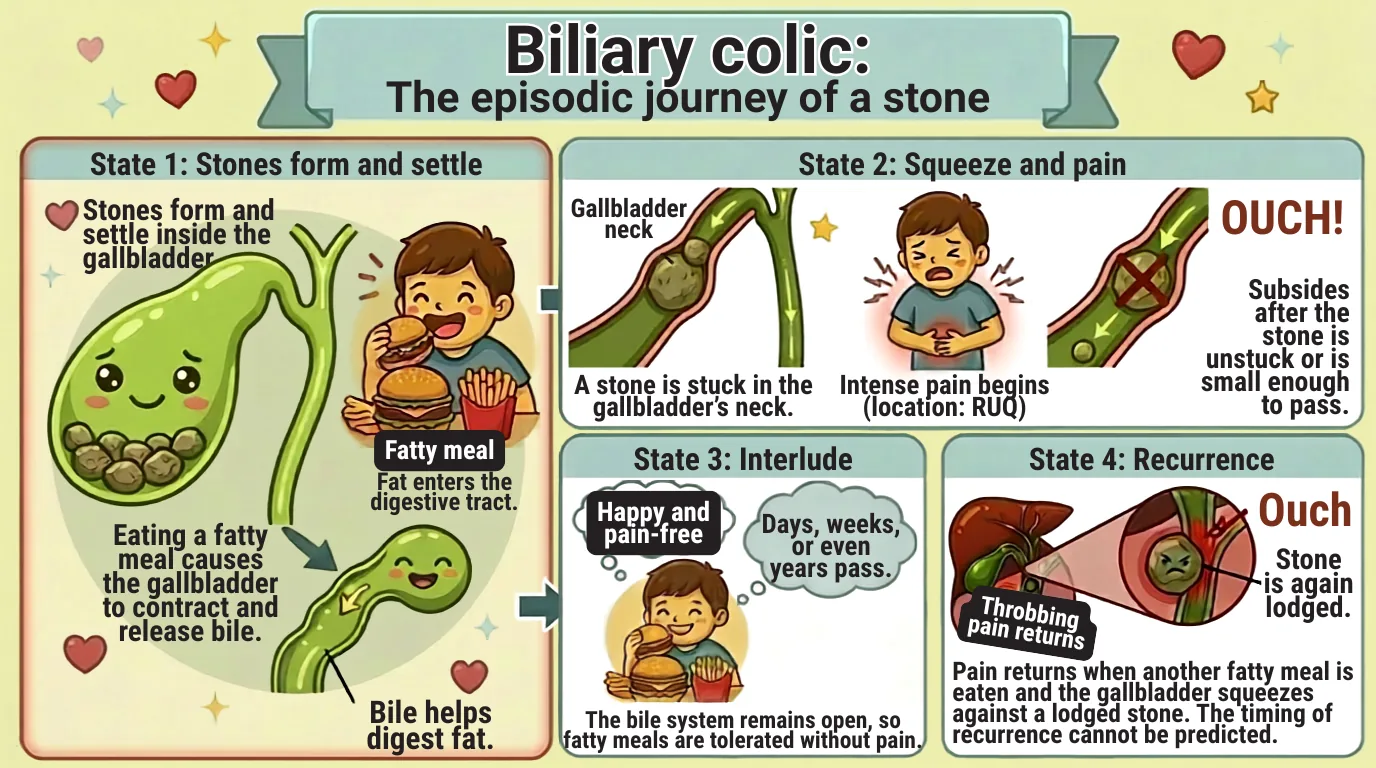
Some gallstones get caught in the narrow neck of the gallbladder, the point where it opens into the cystic duct (remember Part 1 of this series). When a fatty meal reaches your small intestine, your body releases CCK, the hormone that tells the gallbladder to contract and squeeze bile out through the cystic duct.¹ If a stone is sitting in that narrow neck during the squeeze, the gallbladder contracts against a blockage rather than an open channel, and that is what produces right upper quadrant (RUQ) pain.
The pain subsides once the stone works free or is small enough to pass on its own. This pattern of episodic RUQ pain that comes on with a fatty meal and then resolves is called biliary colic. Once it starts, there is no reliable way to predict if or when it will happen again. Days, weeks, or even years can pass between episodes, since the bile system otherwise remains open and fatty meals are tolerated without pain in between.
Sludge
Sludge can do the same thing. Remember the sugar collecting at the bottom of iced tea from Part 3? When tiny cholesterol crystals clump together before forming a true stone, that collection of crystals, what we call sludge, can block the cystic duct and produce the same biliary colic pain.²
Biliary Colic Is a Surgical Indication
Once biliary colic is confirmed, I recommend surgery. This is not an emergency, but it is a clear surgical indication. Left alone, episodes tend to recur, sometimes so frequently that patients arrive at the emergency department in active pain and are admitted for cholecystectomy, removal of the gallbladder, to resolve the problem.
When Stones Never Cause Pain
Most people with gallstones never experience pain. Only about 1 in 10 people with silent gallstones develop symptoms within 5 years of diagnosis, and about 1 in 5 within 20 years.² That means roughly 4 out of every 5 people carrying silent stones will never have a problem from them in their lifetime.
For these patients, surgery is not recommended. Surgery, even a safe and well established operation like cholecystectomy, carries its own real risks including bleeding, infection, injury to surrounding structures, and anesthesia complications. Operating on every stone we find, when most will never cause a problem, would expose far more people to surgical risk than it would protect from gallbladder disease. That's why we don't operate on every stone.
For more on gallbladder disease and when removal is recommended, see my gallbladder patient guide. Missed the earlier posts in this series? You can find them all on the blog.
Up next: cholecystitis, and what happens when the stone does not come free.
References
1. Almajid AN, Sugumar K. Physiology, Bile. StatPearls [Internet]. Treasure Island, FL: StatPearls Publishing; updated September 12, 2022. https://www.ncbi.nlm.nih.gov/books/NBK542254/
2. Jones MW, Weir CB, Marietta M. Gallstones (Cholelithiasis). StatPearls [Internet]. Treasure Island, FL: StatPearls Publishing; updated June 2, 2025. https://www.ncbi.nlm.nih.gov/books/NBK459370/
3. Friedman GD. Natural history of asymptomatic and symptomatic gallstones. Am J Surg. 1993;165(4):399-404. https://doi.org/10.1016/S0002-9610(05)80928-6