Gallstones (cholelithiasis) are the stones themselves: hard pebbles of cholesterol or bile pigment that form inside the gallbladder. Cholecystitis is inflammation of the gallbladder, usually because one of those stones has blocked its outlet and stayed there. Having gallstones is not the same as having a sick gallbladder, and most people with gallstones never have a problem.
Patients often come to me with an ultrasound report that says "cholelithiasis" and assume surgery is next. Often it is not. This is how I explain the difference.
Part 1 is for patients. Part 2 is for medical students and residents.
Part 1: The stone and the reaction
Follow the stone
Pick where the stone goes, or press Play all to see the five steps. You will hear me explain each one. Step 1 is silent gallstones. Step 3 is cholecystitis.
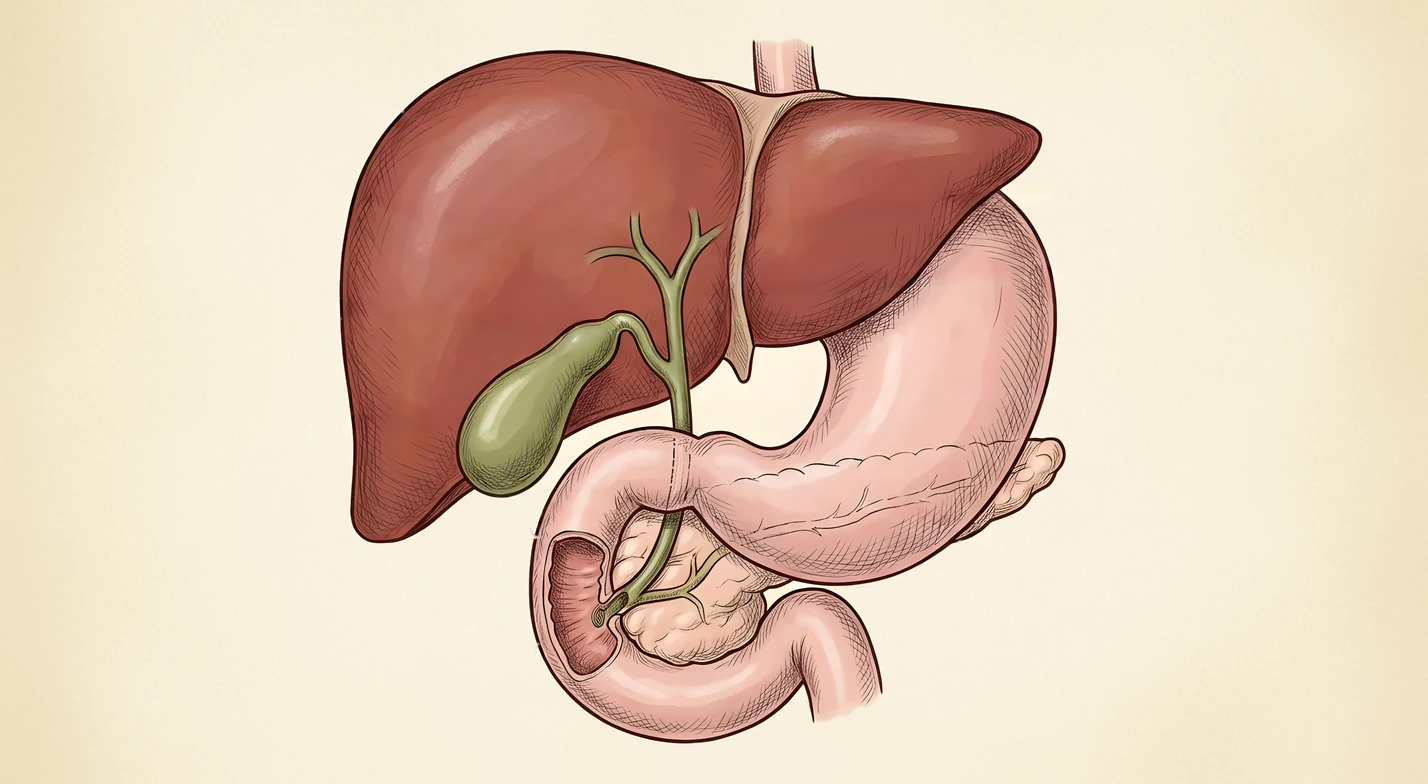
Step 1
Stones form
Read the whole script
Bile is mostly water, mixed with cholesterol and bile salts. When there is more cholesterol than the bile salts can hold, or the gallbladder does not empty well, tiny crystals can form. Over time, these tiny crystals grow into stones. Having stones is not by itself a reason to take out the gallbladder. The time to talk about surgery is when those stones start causing trouble.
Stones can cause several problems. The first is what I most commonly see, where a stone gets caught in the neck of the gallbladder, and when the gallbladder squeezes against that stone, you can often feel pain, especially after a fatty meal. If that stone falls back into the gallbladder, the pain goes away. This is called biliary colic.
However, if that stone stays stuck in the neck of the gallbladder, inflammation can occur, and sometimes infection can result. This is called cholecystitis.
Sometimes a stone can leave the gallbladder and get stuck in the common bile duct. This can cause pain and because bile backs up, it can turn your skin and the whites of your eyes yellow. This is called choledocholithiasis, or a stone in the duct. If the bile in the duct becomes infected, this is called cholangitis, and this requires prompt surgical and medical evaluation.
Sometimes this stone travels down to where the bile duct and the pancreatic duct meet. It can block the pancreas from draining and the pancreas becomes inflamed. This is called biliary pancreatitis or gallstone pancreatitis.
How common are gallstones?
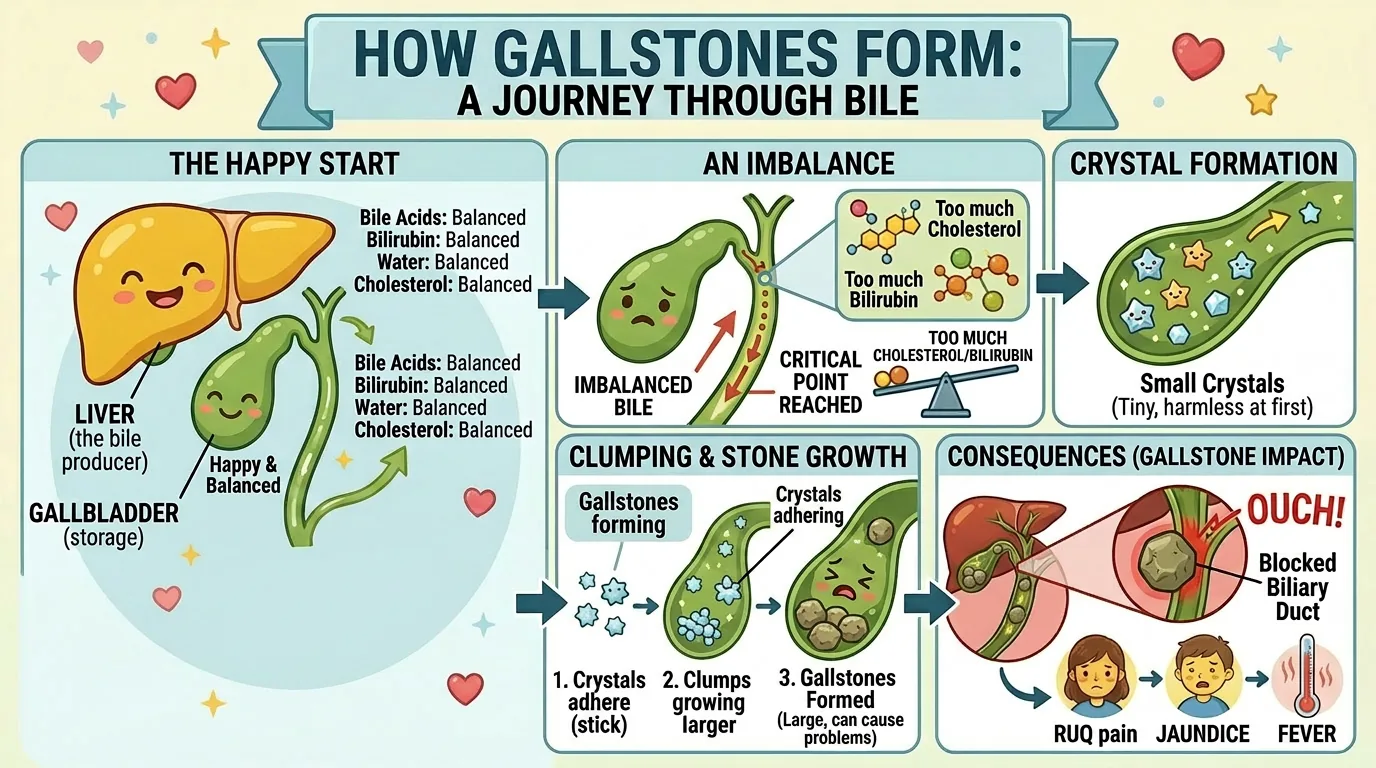
Very common. In the United States, more than 6.3 million men and 14.2 million women between the ages of 20 and 74 have gallstones.¹ Overall, up to 20% of adults develop them at some point.² If you want to know how they form, start with How Do Gallstones Form? (Figure 1).
Do most gallstones cause symptoms?
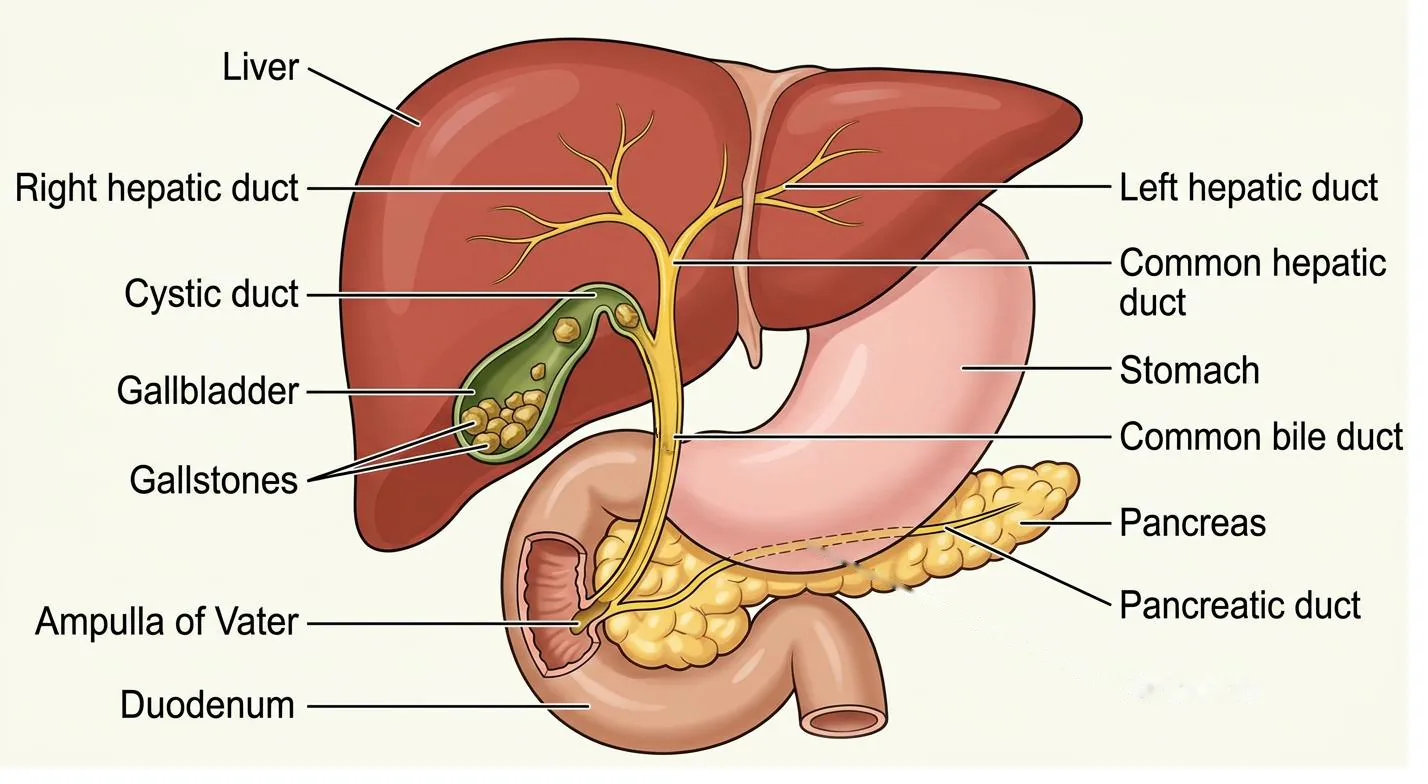
No. Most gallstones are silent. About 10% of people with gallstones develop symptoms within 5 years, and about 20% within 20 years.¹ Many people only learn they have stones because a scan for something else, like a kidney stone or back pain, happened to show them (Figure 2).
What is cholecystitis?
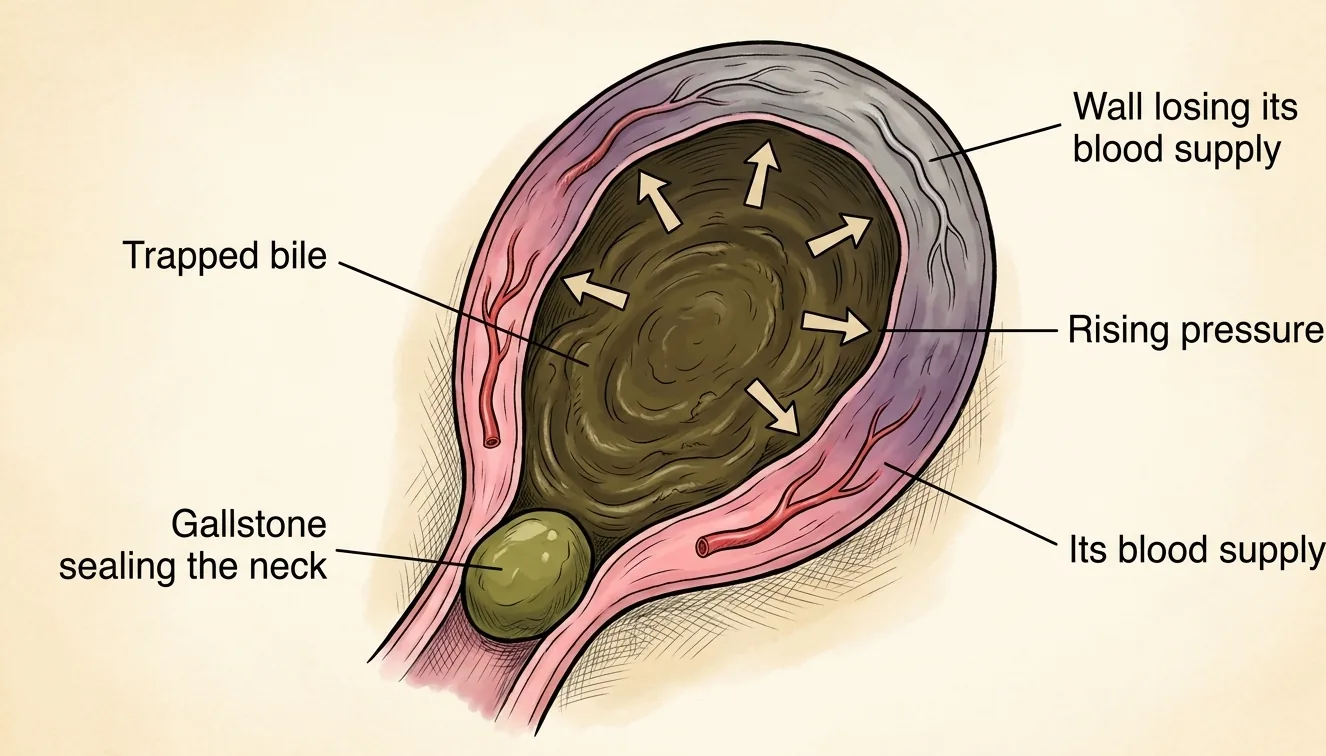
Cholecystitis is the gallbladder's reaction to a stone that will not move. The stone plugs the cystic duct (the gallbladder's outlet). Bile is trapped inside, the gallbladder swells, and its wall becomes inflamed (Figure 3). Gallstones cause about 95% of cases.³
Where does a gallbladder attack (biliary colic) fit in?
In between. In a gallbladder attack (biliary colic), a stone blocks the outlet for a while and then falls back, so the pain eases within a few hours. In cholecystitis, the stone stays stuck and the pain does not go away. I compare those two in Biliary Colic vs. Cholecystitis.
How do silent gallstones, biliary colic and cholecystitis compare?
| Silent gallstones | Gallbladder attack (biliary colic) | Cholecystitis | |
|---|---|---|---|
| What is happening | Stones sit in the gallbladder | A stone blocks the outlet, then falls back | A stone blocks the outlet and stays |
| Pain | None | Comes on after eating, eases within a few hours | Steady, lasts for hours |
| Fever | No | No | Often |
| Ultrasound | Stones only | Stones only | Stones plus a thick, inflamed gallbladder wall |
| What we usually do | Watch, know the warning signs | Talk about removing the gallbladder | Remove the gallbladder, usually during the same hospital stay |
How does an ultrasound tell gallstones from cholecystitis?
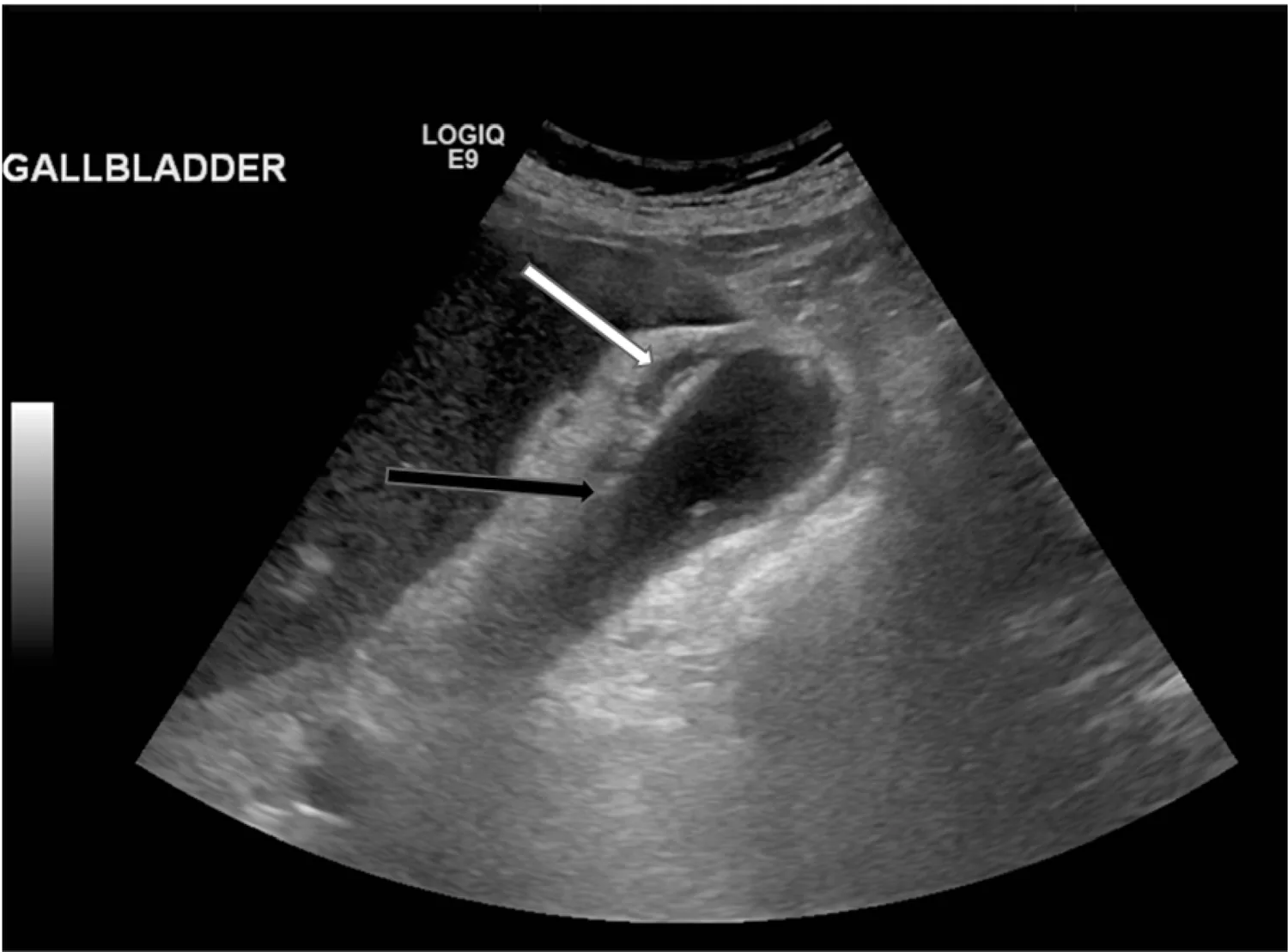
An ultrasound can see gallstones easily. For cholecystitis, it also shows signs that the gallbladder is reacting: a wall thicker than 3 mm, fluid around the gallbladder, and pain when the probe presses over it (Figure 4).¹ Stones without those signs are just stones.
Do gallstones need surgery?
Not if they are silent. Gallstones found by accident in someone without symptoms do not need to be removed, because most never cause trouble.³ That changes when stones start causing attacks or inflame the gallbladder. For cholecystitis, the gallbladder comes out, and for most people that happens during the same hospital stay.³ I go deeper on silent stones in Biliary Colic and Asymptomatic Gallstones.
Your own care: these are the usual treatments. Reading this does not make you my patient or create a doctor-patient relationship. Talk with your own doctor or surgeon about what is right for you.
When does a surgeon recommend removing the gallbladder for gallstones?
The part of the report I care about most is not the stone. It is your story. If you have never had pain, I usually tell you to keep your gallbladder and know the warning signs below. If you are having typical attacks after meals, or you have had cholecystitis, that is when we talk about taking the gallbladder out.
When should I go to the emergency department for gallbladder pain?
- If the pain comes and goes, call your doctor or surgeon for advice.
- If the pain does not go away, call your doctor or surgeon, and go to the emergency department.
- If you have fever or chills, yellow eyes or skin, or cannot keep anything down, call your doctor or surgeon, and go to the emergency department.
Check yourself
Three quick questions
Tap an answer to see if you are right.
1. Do most people with gallstones get symptoms?
Answer: About 10% get symptoms within 5 years and about 20% within 20 years.
2. What turns gallstones into cholecystitis?
Answer: A stuck stone traps bile, and the gallbladder wall becomes inflamed. A fatty meal can start an attack, but the stuck stone is what causes cholecystitis.
3. Gallstones found by accident, with no pain: do they need surgery?
Answer: Silent stones usually stay silent. More in Biliary Colic and Asymptomatic Gallstones.
Part 2: Resident Pearls
1. Only about 20% of patients with silent gallstones develop symptoms over 20 years. Routine prophylactic cholecystectomy for incidental, asymptomatic cholelithiasis is unnecessary.³
2. The ultrasound signs of acute cholecystitis are a wall over 3 mm, pericholecystic fluid and a sonographic Murphy sign. Stones alone do not make the diagnosis.¹
3. About 95% of patients with acute cholecystitis have gallstones. Acalculous cholecystitis occurs more often in critically ill patients and those on long-term IV nutrition.³
4. TG18 kept the TG13 diagnostic criteria and severity grades for acute cholecystitis without changes. Validation studies supported them.⁵
References
1. Jones MW, Weir CB, Marietta M. Gallstones (Cholelithiasis). In: StatPearls [Internet]. Treasure Island (FL): StatPearls Publishing. Updated June 19, 2026. https://www.ncbi.nlm.nih.gov/books/NBK459370/
2. Lammert F, Gurusamy K, Ko CW, et al. Gallstones. Nat Rev Dis Primers. 2016;2:16024. https://pubmed.ncbi.nlm.nih.gov/27121416/
3. Jones MW, Santos G, Patel PJ. Acute Cholecystitis. In: StatPearls [Internet]. Treasure Island (FL): StatPearls Publishing. Updated July 6, 2025. https://www.ncbi.nlm.nih.gov/books/NBK459171/
4. Murphy MC, Gibney B, Gillespie C, Hynes J, Bolster F. Gallstones top to toe: what the radiologist needs to know. Insights into Imaging. 2020;11(1):13. https://doi.org/10.1186/s13244-019-0825-4
5. Yokoe M, Hata J, Takada T, et al. Tokyo Guidelines 2018: diagnostic criteria and severity grading of acute cholecystitis (with videos). J Hepatobiliary Pancreat Sci. 2018;25(1):41-54. https://pubmed.ncbi.nlm.nih.gov/29032636/